

In the dynamic landscape of industrial materials, Low Cement Castable (LCC) has emerged as a cornerstone for high - performance refractory applications. As a dedicated supplier of Low Cement Castable, I have witnessed firsthand the remarkable evolution of this material and am excited to delve into its future development trends.
Current State of Low Cement Castable
Low Cement Castable is a type of refractory material that contains a relatively low amount of calcium aluminate cement compared to traditional castables. This characteristic gives it several advantages, such as high strength, excellent thermal shock resistance, and low porosity. These properties make LCC suitable for a wide range of industries, including steel, cement, glass, and non - ferrous metals.
In the steel industry, for example, LCC is used in ladles, tundishes, and furnaces. Its ability to withstand high temperatures and chemical corrosion helps to extend the service life of these critical components, reducing maintenance costs and improving overall productivity. In the cement industry, LCC is applied in kiln linings, where it can endure the harsh conditions of high - temperature calcination and mechanical stress.
Technological Advancements Driving Future Trends
Nanotechnology Integration
One of the most significant future trends in Low Cement Castable is the integration of nanotechnology. Nanomaterials have unique properties, such as high surface area, excellent reactivity, and enhanced mechanical strength at the nanoscale. By incorporating nanomaterials into LCC, we can improve its performance in several ways.
For instance, adding nano - sized alumina particles can enhance the densification process during sintering, resulting in a more compact and stronger microstructure. This leads to improved thermal conductivity and better resistance to thermal shock. Nanoparticles can also act as nucleation sites for the formation of secondary phases, which can further enhance the material's chemical stability and corrosion resistance.
Development of Self - Healing Materials
Self - healing materials are another area of great potential for Low Cement Castable. In high - temperature industrial environments, LCC is often subjected to thermal cycling, mechanical stress, and chemical attack, which can cause cracks and damage over time. Self - healing LCC can repair these damages autonomously, extending the service life of the refractory lining.
The principle behind self - healing LCC is based on the incorporation of healing agents into the material matrix. These agents can be activated by temperature, stress, or chemical reactions. For example, some self - healing systems use microcapsules filled with a reactive liquid. When a crack forms, the microcapsules rupture, releasing the liquid, which then reacts with the surrounding matrix to fill the crack and restore the material's integrity.
Digitalization and Smart Manufacturing
The future of Low Cement Castable production will also be shaped by digitalization and smart manufacturing technologies. Digitalization allows for real - time monitoring and control of the production process, ensuring consistent quality and performance. For example, sensors can be installed in the production equipment to measure parameters such as temperature, pressure, and composition. This data can be analyzed using advanced algorithms to optimize the production process and detect any potential quality issues early.
Smart manufacturing also enables the customization of Low Cement Castable products. By using computer - aided design (CAD) and 3D printing technologies, we can produce complex shapes and geometries that are tailored to specific customer requirements. This not only improves the installation efficiency but also enhances the performance of the refractory lining in the application.
Market - Driven Trends
Growing Demand in Emerging Economies
The demand for Low Cement Castable is expected to grow significantly in emerging economies. As these countries continue to industrialize, there will be an increasing need for high - performance refractory materials in industries such as steel, cement, and power generation. For example, countries in Asia, Africa, and South America are investing heavily in infrastructure development, which will drive the demand for steel and cement, and consequently, for Low Cement Castable.
In addition, the growing awareness of environmental protection in emerging economies is also promoting the use of Low Cement Castable. LCC has a lower environmental impact compared to traditional refractory materials, as it requires less energy for production and has a longer service life, reducing the need for frequent replacements.
Focus on Energy Efficiency
Energy efficiency is a major concern for industries around the world, and Low Cement Castable can play an important role in addressing this issue. By improving the thermal insulation properties of LCC, we can reduce heat loss in industrial furnaces and kilns, resulting in significant energy savings.
New research is focused on developing Low Cement Castable with lower thermal conductivity. This can be achieved by using lightweight aggregates, improving the pore structure, and optimizing the composition of the material. For example, the use of hollow ceramic microspheres as aggregates can reduce the density of the castable while maintaining its strength, leading to better thermal insulation performance.
Environmental and Sustainability Considerations
Recycling and Reuse
Sustainability is becoming an increasingly important factor in the development of Low Cement Castable. Recycling and reuse of refractory materials are key strategies to reduce waste and conserve natural resources. As a supplier, we are exploring ways to recycle used Low Cement Castable and incorporate it into new products.
The recycling process involves crushing, screening, and separating the used castable into different fractions. These fractions can then be used as raw materials for the production of new LCC or other refractory products. Recycling not only reduces the environmental impact but also helps to lower the production cost.
Reducing Carbon Footprint
Another aspect of sustainability is reducing the carbon footprint of Low Cement Castable production. The production of calcium aluminate cement, a key component of LCC, is energy - intensive and generates a significant amount of carbon dioxide emissions. To address this issue, we are researching alternative binders and production processes that have a lower carbon footprint.
For example, some researchers are exploring the use of geopolymers as binders for Low Cement Castable. Geopolymers are inorganic polymers that can be synthesized from industrial by - products such as fly ash and slag. The production of geopolymers requires less energy and generates less carbon dioxide compared to traditional cement production.
Related Products and Their Synergies
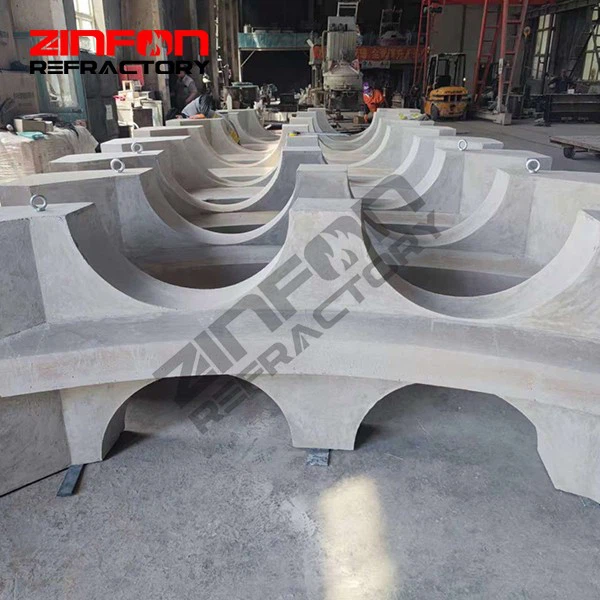
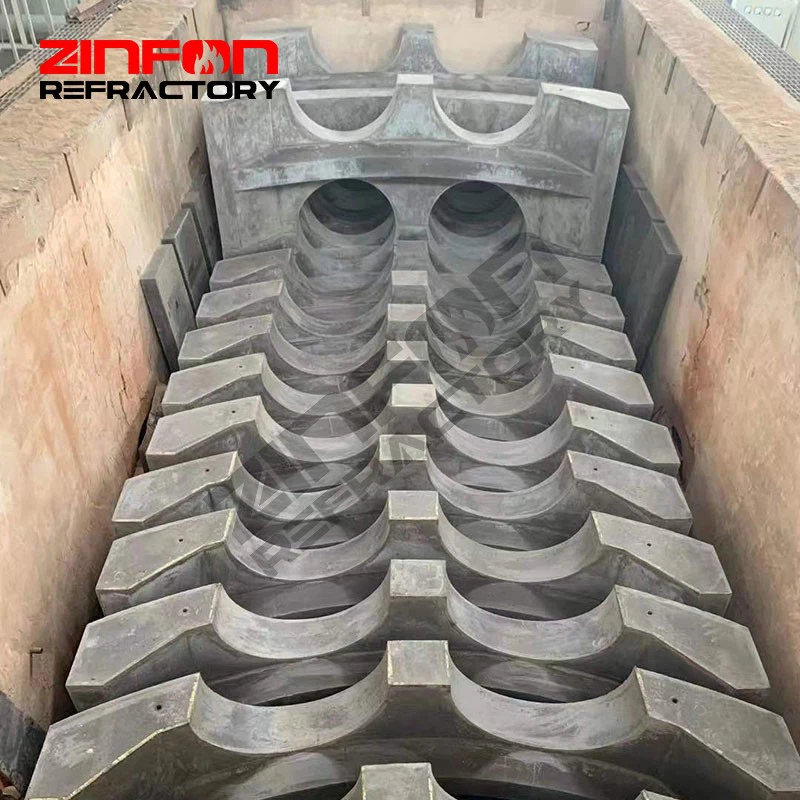
In addition to Low Cement Castable, our product portfolio also includes Refractory Precast Block. Refractory Precast Blocks are pre - fabricated refractory components that offer several advantages over traditional cast - in - place refractory linings. They can be produced in a controlled factory environment, ensuring consistent quality and performance.
The combination of Low Cement Castable and Refractory Precast Blocks can provide a comprehensive solution for industrial refractory applications. For example, in large - scale industrial furnaces, Refractory Precast Blocks can be used for the main structure, while Low Cement Castable can be used for the joints and areas that require more complex shapes or higher performance. This synergy allows for a more efficient and cost - effective installation, as well as improved overall performance of the refractory lining.
Conclusion and Call to Action
The future of Low Cement Castable is filled with exciting possibilities. Technological advancements, market - driven trends, and environmental considerations are all shaping the development of this important refractory material. As a supplier, we are committed to staying at the forefront of these trends, continuously innovating and improving our products to meet the evolving needs of our customers.
If you are in the market for high - quality Low Cement Castable or related refractory products, we invite you to contact us for a detailed discussion. Our team of experts is ready to provide you with customized solutions and professional advice to ensure the success of your industrial projects. Whether you are looking for a standard product or a tailored solution, we have the experience and expertise to meet your requirements.
References
- "Refractory Materials Science and Technology" by Philip J. F. Harris
- "Advances in Refractory Technology" edited by S. K. Ray
- Journal of the American Ceramic Society, various issues related to refractory materials research