

Silica bricks are widely recognized in the industrial sector for their remarkable ability to withstand high - temperature environments. As a trusted silica brick supplier, I am frequently asked about how these bricks resist oxidation at high temperatures. In this blog, I will delve into the scientific mechanisms behind this property and explain why silica bricks are an ideal choice for many high - temperature applications.
Chemical Composition and Oxidation Resistance
Silica bricks are primarily composed of silica (SiO₂), which is a key factor in their high - temperature oxidation resistance. The high purity of silica in these bricks means that there are fewer impurities that could potentially react with oxygen at high temperatures. Impurities such as iron oxides, alkalis, and other metallic compounds can act as catalysts for oxidation reactions or participate in chemical reactions that degrade the brick structure.
When silica bricks are exposed to high - temperature oxidizing atmospheres, the silica forms a protective layer on the surface. This layer is a result of the reaction between silica and oxygen in the air. The reaction can be represented by the following simplified chemical equation: Si + O₂ → SiO₂. Since the bricks are already made of silica, this reaction essentially reinforces the existing structure rather than causing significant degradation.

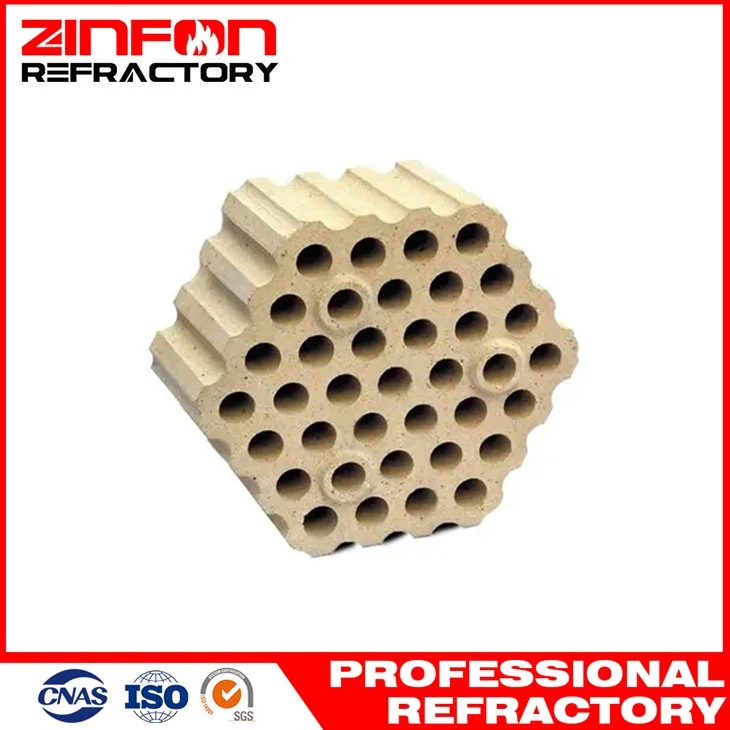
The protective silica layer has several beneficial properties. First, it is a relatively stable compound at high temperatures. Silica has a high melting point (around 1713°C), which means that it remains solid in many high - temperature industrial processes. This solid layer acts as a physical barrier, preventing oxygen from diffusing into the interior of the brick and reacting with the underlying material.
Second, the silica layer has low reactivity with most common gases present in industrial environments. It does not readily react with oxygen, carbon dioxide, or nitrogen under normal high - temperature conditions. This chemical inertness further enhances the brick's ability to resist oxidation.
Microstructure and Oxidation Resistance
The microstructure of silica bricks also plays a crucial role in their oxidation resistance. Silica bricks typically have a fine - grained and dense structure. The fine grains provide a large surface area for the formation of the protective silica layer. When the brick is heated, the oxygen in the air can react with the surface of the grains, quickly forming a continuous and uniform protective layer.
The dense structure of silica bricks reduces the porosity of the material. Porosity is an important factor in oxidation resistance because it affects the diffusion of oxygen into the brick. In a porous material, oxygen can easily penetrate through the pores and reach the interior of the brick, where it can react with the silica and other components. In silica bricks, the low porosity restricts the movement of oxygen, limiting the oxidation reaction to the surface layer.
Moreover, the grain boundaries in silica bricks contribute to their oxidation resistance. Grain boundaries can act as barriers to the diffusion of oxygen. Oxygen atoms have to overcome the energy barrier at the grain boundaries to move from one grain to another. This slows down the diffusion process and reduces the rate of oxidation inside the brick.
Phase Transformations and Oxidation Resistance
Silica exists in several polymorphic forms, including quartz, tridymite, and cristobalite. During the manufacturing process of silica bricks, the silica is often transformed into a more stable high - temperature phase, such as tridymite or cristobalite.
These high - temperature phases have different crystal structures and thermal properties compared to quartz. Tridymite and cristobalite have more open crystal structures, which can accommodate small amounts of thermal expansion without causing significant damage to the brick structure. This is important because thermal expansion can create cracks in the brick, providing pathways for oxygen to enter and accelerate the oxidation process.
When silica bricks are heated to high temperatures, the phase transformations that occur help to relieve internal stresses caused by thermal expansion. For example, the transformation from quartz to tridymite or cristobalite is accompanied by a volume change. This volume change can be carefully controlled during the manufacturing process to create a more stable and stress - free structure. A stress - free structure is less likely to develop cracks, which would otherwise allow oxygen to penetrate and cause oxidation.
Applications of Silica Bricks in High - Temperature Oxidizing Environments
Silica bricks are widely used in various industries where high - temperature oxidation resistance is required. One of the most common applications is in the steel industry. In steelmaking furnaces, such as basic oxygen furnaces and electric arc furnaces, the temperature can reach up to 1600°C or higher. Silica bricks are used as lining materials in these furnaces because of their ability to resist oxidation and thermal shock.
In the glass industry, silica bricks are also used in glass melting furnaces. The high - temperature environment in these furnaces (around 1500 - 1600°C) requires materials that can withstand oxidation and maintain their structural integrity. Silica bricks provide an excellent solution due to their high melting point, oxidation resistance, and chemical inertness.
Another application is in the ceramic industry. Kilns used for firing ceramics operate at high temperatures, often between 1000°C and 1400°C. Silica bricks are used to line the kilns because they can resist oxidation and provide a stable environment for the ceramic firing process.
Product Offerings
As a silica brick supplier, we offer a wide range of silica bricks to meet the diverse needs of our customers. Our Fused Silica Brick is a high - quality product that is made by fusing high - purity silica. It has excellent thermal shock resistance and oxidation resistance, making it suitable for applications in high - temperature industries.
Our Silica Refractory Bricks are also popular among customers. These bricks are manufactured using advanced techniques to ensure a uniform microstructure and high density. They are available in different sizes and shapes to fit various industrial furnaces and kilns.
Contact for Procurement
If you are looking for high - quality silica bricks with excellent oxidation resistance for your high - temperature applications, we are here to help. Our team of experts can provide you with detailed information about our products and assist you in selecting the most suitable silica bricks for your specific needs. Whether you are in the steel, glass, or ceramic industry, we have the right solution for you. Contact us today to start a procurement discussion and find out how our silica bricks can enhance the performance and longevity of your high - temperature equipment.
References
- Reed, J. S. (1995). Principles of Ceramic Processing. John Wiley & Sons.
- Schneider, H., & Wiggenhauser, H. (2008). Refractories Handbook. Wiley - VCH.
- Kingery, W. D., Bowen, H. K., & Uhlmann, D. R. (1976). Introduction to Ceramics. John Wiley & Sons.