


Impact of oxygen on steel quality
In the steelmaking process, oxygen plays a dual role:
On the one hand, during the heating and blowing stages of molten steel, oxygen reacts with carbon, sulfur, and other harmful elements, helping to remove impurities, purify the steel, and improve its chemical cleanliness.
On the other hand, residual oxygen in the molten steel can negatively affect the final steel properties, primarily in the following three ways:
Formation of non-metallic inclusions: Excess oxygen reacts with elements in the steel (such as Al, Si, Mn, etc.) to form oxide inclusions. These inclusions disrupt the continuity of the steel matrix and reduce its strength, impact toughness, elongation, weldability, and magnetic permeability.
Porosity defects: If the oxygen content in molten steel is too high, it can react with carbon during casting to form CO gas. This may lead to porosity, blowholes, or even bulging. In severe cases, the steel may become unusable.
Aggravation of sulfur-related issues: The presence of oxygen reduces the solubility of sulfur in steel, promoting sulfur precipitation and the formation of low-melting-point sulfides. This increases the tendency for hot shortness (thermal embrittlement) and impairs the steel's hot-working properties.
Causes of increased oxygen levels
Oxygen Introduced by Raw Materials
(1)Surface Oxides on the Charge (FeO, MnO, SiO₂, etc.)
The charge, usually consisting of scrap or alloy materials, is often covered with a layer of oxide or oxide inclusions on its surface.
During the melting process, these surface oxides enter the molten steel, effectively introducing oxygen.
(2)Alloy Additives Containing Oxygen
If added alloys (such as FeSi, FeMn) are not properly dried or contain impurities, they may also introduce oxygen into the steel.
Oxygen from Reactions with Furnace Lining Materials
(1)Acidic or Neutral Furnace Linings
If the furnace lining material is unstable or reactive (such as SiO₂), it can react with carbon at high temperatures:
SiO₂ + C → SiO↑ + CO↑
This reaction produces gases like SiO and CO, which is equivalent to releasing oxygen into the system.
(2)Reactions Involving Impurities in Refractories (e.g., MgO)
At high temperatures, impurity oxides may decompose or react with the molten steel, potentially releasing oxygen.
Oxygen Introduced from Air Ingress
(1)Unsealed Furnace Cover or Open Charging Port
During charging, slag removal, or temperature measurement in an induction furnace, the furnace cover may be open, allowing atmospheric oxygen to enter directly.
(2)Air Entrained During Charging
When using mechanical or continuous charging systems, the charge may carry air into the furnace along with it.
In the steelmaking process, to remove carbon, sulfur, and other harmful impurities from molten iron, it is necessary to introduce oxygen-either by blowing oxygen directly or by adding oxidizing agents. This introduces oxygen molecules into the molten metal.
The tendency of various elements in steel to combine with oxygen varies in strength. From weakest to strongest, the order is: chromium, manganese, carbon, silicon, vanadium, titanium, boron, aluminum, zirconium, calcium.
Therefore, steel deoxidation is commonly performed using ferroalloys composed of silicon, manganese, aluminum, and calcium.
Commonly used deoxidation methods in steel smelting
Preoxygenation
Pre-deoxygenation with manganese and silicon as deoxidizers is the conventional process.

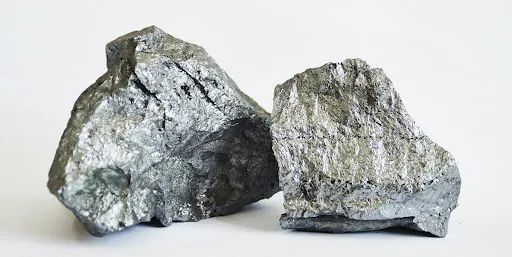
Mechanism of Manganese and Silicon Deoxidation
Manganese and silicon have relatively weak deoxidation abilities, but they are effective when the initial oxygen content in the steel is high. Their synergistic effect can improve deoxidation efficiency. When the ratio between them is appropriate, the deoxidation products form low-melting-point MnO–SiO₂ compounds (manganese peridotite), which facilitate flotation and removal of inclusions.
Mn/Si Ratio in Pre-Deoxidizers
Research shows that only when the SiO₂ content is less than 47% can MnO–SiO₂ or MnO–FeO–SiO₂ compounds form in liquid silicates at steelmaking temperatures. In practice, it is necessary to ensure that the Mn/Si mass ratio is greater than 3 (see Table 1). If the Mn/Si ratio exceeds 4.5, the inclusion content can be further reduced.
Table 1 Effect of Mn/Si ratio in predeoxidizer on the content of nonmetallic inclusions in steel
|
Mn/Si ratio |
3.5 | 4.5 | 6 | 7 |
|
Total inclusions, % |
0.0172 | 0.0146 | 0.0129 | 0.0118 |
However, an excessively high Mn/Si ratio (>8) can result in insufficient silicon addition, inadequate deoxidation, and the formation of free MnO, which has a high melting point and is difficult to float. Based on comprehensive production experience, the Mn/Si ratio should be controlled within the range of 3.5–4.5.
Order of Adding Ferromanganese and Ferrosilicon
During the pre-deoxidation stage, the order of adding ferromanganese and ferrosilicon must be strictly followed:
If ferrosilicon is added first, it forms high-melting-point SiO₂ inclusions (>54%), making it difficult for the subsequently added manganese to reduce these oxides. This hinders the flotation of inclusions, resulting in a higher total inclusion content (0.0268%).
Conversely, if ferromanganese is added first, it generates MnO, and the subsequent addition of ferrosilicon leads to the formation of low-melting-point MnO–SiO₂ inclusions. This approach facilitates better flotation, reducing the total inclusion content to 0.0148% (see Table 2).
Table 2: Effect of the Order of Addition of Ferromanganese and Ferrosilicon on the Composition and Content of Inclusions
| Accession order | SiO₂/% | MnO/% | FeO/% | Total inclusions/% |
| Ferrosilicon before ferromanganese | 54.16 | 29.8 | 16.76 | 0.0268 |
| Ferromanganese before ferrosilicon | 37.2 | 55.25 | 7.55 | 0.0148 |
After the completion of pre-deoxidation, precise control of the molten steel's temperature and composition is carried out immediately. During this process, each time the furnace cover is opened, coke powder and ferrosilicon powder should be evenly spread on the surface of the slag. This is done to maintain a reducing atmosphere inside the furnace, continuously lower the oxygen content of the slag, and prevent secondary oxidation of the molten steel.
Once the composition and temperature of the molten steel have reached the target requirements, the final deoxidation operation can be performed. The steel is then tapped according to standard procedures to ensure that its quality remains stable and meets the required specifications.
Terminal Deoxidation
Aluminum deoxidation process
In China's steel casting industry, aluminum deoxidation remains the mainstream method for final deoxidation. However, in actual production, some enterprises do not strictly control the amount and method of aluminum addition, which often leads to fluctuations in molten steel quality and affects the performance of castings.
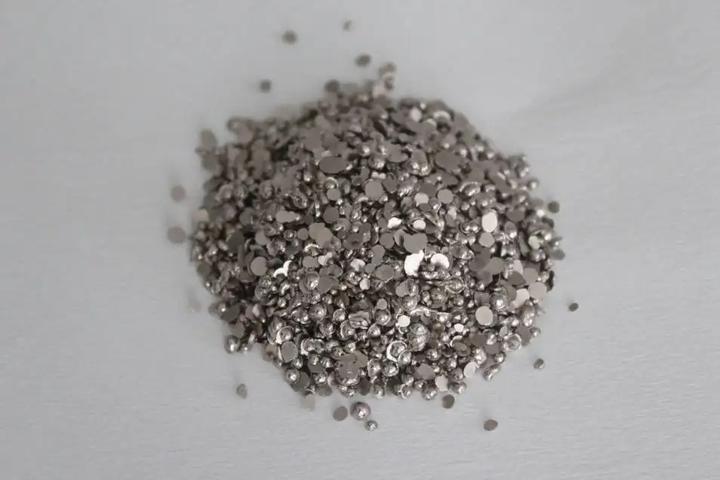
Aluminum can be added directly into the molten steel or introduced using the furnace insertion method. When determining the amount of aluminum to add, both the deoxidation effect and inclusion control must be considered. Without aluminum addition, deoxidation of the molten steel is insufficient, and grain refinement becomes difficult. On the other hand, if the residual aluminum content exceeds 0.04%, it may easily lead to the formation of harmful Type II inclusions.
Taking aluminum recovery rate into account, the amount added should not be less than 0.08%. It is recommended to control the residual aluminum content in steel within the range of 0.04% to 0.06%, which corresponds to an addition range of 0.08% to 0.12%. The upper limit may be appropriate for low-carbon steels.
Excessive aluminum addition causes harm in two main ways:
(1) Reduced fluidity of molten steel and blockage of the pouring system
During pre-deoxidation (e.g., using silicomanganese) and diffusion deoxidation, the oxygen content in the molten steel is already low. If excessive aluminum is added at this stage, it reacts with MnO and SiO₂ to form a large number of high-melting-point Al₂O₃ inclusions. These inclusions have poor wettability and tend to agglomerate into clusters, making them difficult to remove by flotation. This significantly reduces the fluidity of the molten steel and can lead to blockages in filters, pouring channels, and pin gates. In severe cases, the entire pouring system may fail, affecting both casting quality and production stability.
(2) Brittle fracture caused by aluminum nitride (AlN)
In large or thick castings, a common form of grain boundary brittle fracture known as "stone fracture" is mainly caused by the precipitation of AlN along grain boundaries. This occurs due to the reaction between aluminum and nitrogen in the steel. When the nitrogen content is high and aluminum is excessive, AlN forms a network-like distribution, weakening grain boundary strength. Even after heat treatment, this structure can result in brittle fracture under minor stresses, severely compromising the reliability of the casting.
In summary, aluminum addition during the final deoxidation process must be precisely controlled. It is important not only to ensure sufficient deoxidation but also to prevent the harmful effects of aluminum oxide and aluminum nitride inclusions on molten steel fluidity and casting toughness. This is essential to guarantee the safety and reliability of cast steel components in service.
Method of Aluminum Addition for Deoxidation
The rationality and operational stability of the aluminum addition method are key to ensuring consistent aluminum yield. Since the density of aluminum is less than half that of molten steel, if it is placed directly at the bottom of the ladle, it can easily float to the surface and become wrapped in slag during pouring. This makes it difficult for aluminum to fully react with the molten steel, resulting in large fluctuations in yield and negatively affecting casting quality.
Earlier and relatively effective methods include fixing aluminum blocks to steel bars and inserting them into the molten steel for deoxidation, or continuously adding small pieces of aluminum into the steel stream during tapping. Both methods can achieve good deoxidation results.
To improve stability, the former Soviet Union developed a special deoxidizer by using a prefabricated aluminum–iron alloy containing about 35% aluminum. With a density of approximately 6.15 g/cm³-close to that of molten steel and higher than that of slag-this alloy easily sinks and reacts in the molten steel, improving deoxidation efficiency. Some steel plants in North America have also used aluminum–iron alloy for deoxidation.
However, with the widespread adoption of the wire feeding method-known for its higher aluminum recovery and greater operational stability-it has gradually replaced aluminum–iron alloy in final deoxidation applications.
Application of Calcium in Molten Steel Deoxidation
As the demands of the high-end manufacturing industry on the quality of steel castings continue to rise, the traditional single aluminum deoxidation process has become insufficient to meet the performance requirements of high-grade castings. The aluminum–calcium composite deoxidation process is gradually becoming a focus of industry attention. The synergistic use of aluminum and calcium in the final deoxidation stage can not only deeply reduce the oxygen content in steel, but also significantly improve the morphology, structure, and distribution of non-metallic inclusions. This effectively reduces the total amount of inclusions and plays a key role in enhancing the overall performance of steel.
Research into the application of calcium in steelmaking dates back over 70 years. However, its special physicochemical properties have long limited its industrial adoption. Calcium has a density that is only one-fifth that of molten steel and a boiling point of 1492°C-much lower than typical steelmaking temperatures. It also has extremely high chemical reactivity, making it prone to rapid vaporization or violent reactions in molten steel. These challenges make it difficult to achieve accurate quantitative control, which kept calcium treatment technology in the laboratory research phase for a long time.
Over the past 30 years, with advances in metallurgical theory and technological breakthroughs, the industry has gradually overcome the challenges of calcium addition and yield control. Through the development of calcium-based alloy systems and optimization of addition methods, calcium treatment technology has formally entered the stage of large-scale industrial application.
(1) Deoxidation by Calcium
Calcium has a significantly stronger deoxidizing ability than aluminum and magnesium, based on the free energy of oxide formation. However, the solubility of calcium in molten steel is very low, and its boiling point (1492°C) is much lower than the steelmaking temperature. As a result, it is difficult for calcium to fully react with dissolved oxygen, and its deoxidation effect is limited when used alone. However, in special steels such as high-nickel and high-manganese grades, calcium solubility increases relatively, allowing it to exhibit good deoxidation ability.
When calcium and aluminum are used together, a clear synergistic effect occurs. This combination can reduce the oxygen content in steel to less than 0.002%, effectively prevent the formation of porosity defects, reduce the generation of inclusions, improve the fluidity of molten steel, and enhance the surface quality of castings.
(2) The Role of Calcium on Non-Metallic Inclusions
After adding calcium to aluminum-deoxidized steel, the oxidation product CaO can react with Al₂O₃ to form various calcium aluminate inclusions. These inclusions are larger in size and easier to float to the surface for removal. Some calcium aluminates remain in liquid form at steelmaking temperatures and have high surface activity, allowing them to adsorb and carry other inclusions to float out, thereby significantly improving the efficiency of inclusion removal.
Studies have shown that for low-carbon steel, relying solely on aluminum deoxidation makes it difficult to avoid the formation of type II inclusions. In applications where casting quality is critical, calcium treatment becomes necessary.
Experimental evidence indicates that after aluminum deoxidation, calcium treatment followed by a 2-minute hold can reduce the total amount of oxide inclusions by 60% to 70%. Tests at a steel foundry in the USA have also shown that calcium treatment significantly reduces the number of inclusions and converts them to more favorable type I inclusions, increasing the steel's impact absorption energy at –18 °C by approximately 70%.

Figure 1 I-type inclusions 350× (granular silicates and sulfides)

Fig. 2 Type II - inclusions
(sulfides precipitated along grain boundaries, sometimes aggregated fine alumina is also visible)
Methods of Adding Calcium to Steel
Although calcium treatment has significant advantages in improving the quality of molten steel, its practical application faces many challenges due to calcium's low density, low boiling point, and high chemical activity. To address these issues, the industry has developed a variety of calcium addition methods, which can be broadly categorized into two main approaches:
(1) Line Feeding and Spray Refining
The most effective calcium addition method is to introduce calcium alloy directly into the molten steel, using the hydrostatic pressure of the molten steel to minimize calcium volatilization. This increases calcium yield and ensures sufficient reaction with the molten steel. Common techniques include powder spraying, wire feeding, and aluminum projectiles.
However, calcium metal is generally not used in these processes because of its high cost and difficulty in storage and handling. Instead, calcium-containing alloys are used to reduce calcium activity and improve calcium yield. Currently, calcium-silicon alloys are widely employed in molten steel treatment, often as an inoculant for cast iron.
a. Powder Spraying Method
The powder spraying method was developed by the German company Thyssen-Niederein in the 1960s and began industrial application in the 1970s for large steel ladles. This method fluidizes calcium alloy powder and sprays it onto the bottom of the ladle using argon gas.
b. Wire Feeding
Originally developed for aluminum feeding to improve steel quality by stabilizing aluminum yield, this method is now widely used for calcium-silicon alloy powder feeding, such as in line feeding treatments. It is suitable for small and medium-sized steel casting enterprises and can effectively deliver calcium alloy powder to the bottom of the ladle.
c. Aluminum Projectile Projection Method
Developed by Sumitomo Metals in Japan, this method is primarily used to add calcium alloy into molten steel. Aluminum sheets are shaped into bullet-like projectiles containing calcium alloy and other treatment agents, which are then shot into the molten steel using a launching device for deoxidation.
(2) Direct Calcium Alloying
Direct calcium alloying is the most convenient way to add calcium by alloying calcium with other elements to reduce its chemical activity, making it easier to add directly to the steel. This method is especially suitable for production environments with small melting equipment. Traditional calcium-silicon alloys react violently at steelmaking temperatures, which can cause fluctuations in treatment effectiveness. The addition of barium as a buffer plays an important role in partially replacing calcium. Adding the right amount of barium can effectively reduce calcium's activity, making it more adaptable for molten steel treatment.
However, even as a buffer alloy, the calcium yield is still significantly lower than that of calcium-silicon alloys used in injection methods. Union Carbide developed a silicon-calcium-barium alloy (Calsibar) early on for deoxidation, which was widely used in combination with the synergistic deoxidation effect of aluminum. To improve operational convenience, the silicon-calcium-barium-aluminum alloy (Hypercal) was introduced. It has higher density and lower activity, can be added directly to steel, is easy to operate, and provides stable treatment effects. Although its calcium content is lower than that of calcium-silicon alloys, the actual calcium addition is reduced due to its higher yield.
In practical applications, silicon-calcium-barium alloy is usually added after aluminum or simultaneously with it. Recommended dosages for different steel alloys are as follows:
·Carbon steel and low-alloy steel: recommended addition of 0.5 kg of aluminum and 2 to 2.5 kg of silicon-calcium-barium alloy per ton of liquid steel.
·Austenitic stainless steel: due to the high solubility of calcium, it is recommended to add 2.5 to 3.5 kg of silicon-calcium-barium alloy; the dosage may be increased to strengthen deoxidation if necessary.
·Ferritic stainless steel: calcium solubility is relatively low, so aluminum addition is usually required. The recommended dosage of silicon-calcium-barium-aluminum alloy is 3 to 4 kg per ton of liquid steel. For ultra-low carbon ferritic stainless steel, a small supplemental amount of aluminum may still be needed to ensure sufficient deoxidation.
The chemical compositions and densities of two calcium-containing alloys produced by Union Carbide are shown in Table 3.
Table 3 Chemical composition and density alloys of calcium-containing alloys
|
Alloys |
Ca (%) |
Si(%) |
Ba(%) |
Al(%) |
Fe(%) |
Densities(g/cm³) |
|
Calsibar |
14~17 |
57~62 |
14~18 |
一 |
≤5 |
2.87 |
|
Hypercal |
10~13 |
38~40 |
9~12 |
19~21 |
≤7 |
3.20 |
Note: Density values are for reference only.
As early as more than ten years ago, the domestic has realized the production of alloys with similar composition, and in 1995 formulated the industry standard YB/T 067-1995 "Silica-Calcium-Barium Aluminum Alloy", the standard is divided into three alloy grades (see Table 4).
Table 4 Grades and chemical compositions of silica-calcium-barium aluminum alloys (YB/T 067-1995)
|
Grades |
Si |
Ca |
Ba |
Al |
Mn |
C |
P |
S |
|
Fe16Ba9Ca12Si30 |
≥30.0 |
≥12.0 |
≥9.0 |
≥16.0 |
≤0.40 |
≤0.40 |
≤0.04 |
≤0.02 |
|
Fe12Ba9Ca9Si35 |
≥35.0 |
≥9.0 |
≥9.0 |
≥12.0 |
≤0.40 |
≤0.40 |
≤0.04 |
≤0.02 |
|
Fe8Ba12Ca6Si40 |
≥40.0 |
≥6.0 |
≥12.0 |
≥8.0 |
≤0.40 |
≤0.40 |
≤0.04 |
≤0.02 |
In view of the very high chemical activity of calcium, operational consistency has a decisive influence on its yield. Even a slight mistake can lead to large fluctuations in yield. Therefore, it is necessary to strictly follow the operating procedures to prevent arbitrary operations.
In practice, small pieces of calcium-containing alloy should be added one by one into the molten steel stream during steel production to ensure full reaction with the molten steel. It is strictly prohibited to put the alloy into an empty ladle before steel discharge, and it is even more forbidden to throw it randomly onto the slag surface. Violating these operating rules not only causes waste of alloy but also seriously weakens the deoxidation effect, making it difficult for the casting quality to meet the standards.
7*24 hours online response
Provide professional after-sales protection
Our address
Qinghua Management Dist., Dashiqiao City, Yingkou City, Liaoning, China
Phone Number
+8613700131695
+381668083544
info@zinfon-refractory.com
