


Some blast furnaces in the iron‑making industry can operate stably and efficiently for more than 15 years, and some benchmark furnaces even achieve a campaign life of 20‑25 years. However, a small number of blast furnaces suffer malignant hearth‑bottom burn‑through accidents only several months after commissioning or after 2‑4 years of operation. Such incidents bring severe personal safety threats, huge property losses and production shutdown risks to iron‑ and‑steel enterprises.
Hearth‑bottom burn‑through ranks among the most serious production accidents in iron‑making. Essentially, refractory linings are continuously thinned under the combined impacts of chemical erosion, mechanical scouring, thermal‑stress damage and water‑induced hazards. Penetrating molten iron comes into direct contact with cooling equipment and furnace shell, which finally leads to molten burn‑through. Based on domestic burn‑through cases and post‑shutdown damage‑investigation results, each accident has its specific triggers, yet many common root causes exist across incidents. These problems cover the full chain including design and material selection, construction, raw‑material control, cooling systems and daily operation‑maintenance.
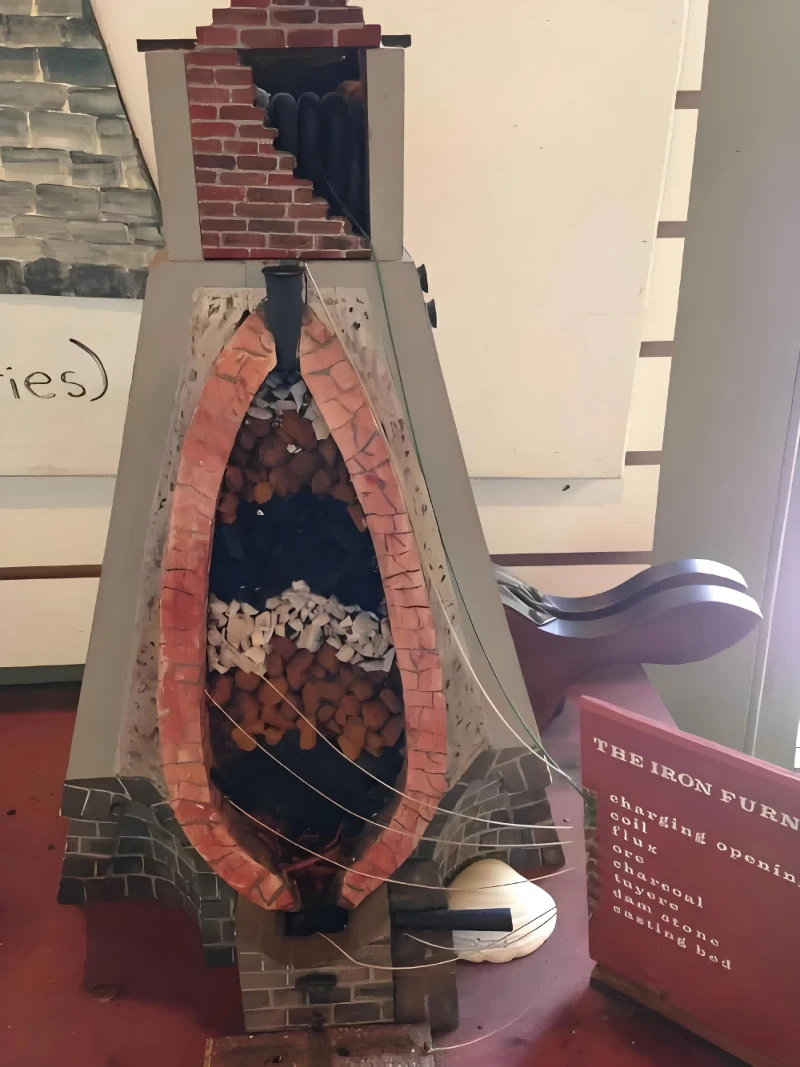
Inherent Design Defects Conceal Hidden Safety Hazards
Mismatched cooling capacity and refractory performance is a major hazard. In one 3 200 m³ blast furnace with ceramic‑cup hearth, once the ceramic‑cup lining cracked or eroded, the carbon‑rammed layer and under‑capacity cast‑iron cooling staves formed thermal‑resistance layers, blocking outward heat transfer. Without stable protective slag‑iron layers on the hot face of carbon bricks, non‑microporous graphite‑rich carbon bricks were easily eroded by molten iron.
Modern high‑intensity smelting demands upgraded cooling parameters: cooling‑stave internal water velocity ≥2.0 m/s, ratio of cooling‑pipe cross‑section to stave area >1.0, and hearth water‑temperature rise kept below 0.5 °C. Heat‑flux intensity should stay under 10 000 W/m²; red alerts activate at 12 000 W/m², while values of 18 000‑21 000 W/m² create high burn‑through risk. The No.14 furnace at Gary Works (USA) burned out under a heat flux of 12 880 W/m² due to insufficient jacket‑type cooling.
Inadequate monitoring is another flaw. Sparse temperature measuring points and incomplete monitoring of water flow, temperature difference and heat flux delay risk warnings. Furnaces with complete monitoring managed to contain iron‑infiltration incidents before catastrophic burn‑through.
Unsuitable carbon‑brick selection can cause early damage. At Yangchun Ironmaking Plant, a 1 250 m³ furnace saw hearth‑wall carbon‑brick temperatures exceed 600 °C only 15 days after blow‑in, with over 70 tons of iron infiltration within 8 months. Large brick gaps of 30‑70 mm originated from poor brick calcination or low‑quality masonry. Graphitic or semi‑graphitic carbon bricks should not be used for molten‑iron‑contact zones, as graphite readily suffers carburizing melt‑loss and fails to hold protective slag skins. When purchasing carbon bricks, both thermal conductivity and micropore / anti‑molten‑iron‑erosion indexes must be evaluated, rather than only pursuing high thermal conductivity.
Improper taphole layout accelerates local erosion. A 90° angle between two tapholes aggravates molten‑iron circulation. Unequal‑length slag runners lead to repeated tapping from one taphole, speeding up local hearth wear.
Deficiencies in Manufacturing & Construction
Cooling‑stave quality is critical. Cooling systems must pass water‑pressure leak tests before refractory masonry. Conventionally drilled rolled‑copper cooling staves contain multiple welded plug points; weld failure and water leakage oxidize carbon bricks. Cast‑copper cooling staves avoid this weakness and have been widely adopted.
Carbon‑brick masonry gaps should be controlled within 0.5 mm. The carbon‑rammed material between carbon bricks and cooling staves needs thermal conductivity close to carbon bricks (15‑20 W/(m·K)) to avoid thermal‑resistance layers. Optimized taphole‑zone cooling and filling materials help reduce splashing and maintain adequate taphole depth.
Operational and Maintenance Problems after Commissioning
Strictly limit harmful element input. Potassium, sodium, zinc and lead circulate and accumulate inside furnaces, causing carbon‑brick swelling, cracking and pulverization. Per Chinese specifications, incoming K+Na ≤3.0 kg/t‑HM and Zn ≤0.15 kg/t‑HM. Regular alkali‑removal is required.
Timely repair leaking cooling equipment. Water ingress from defective tuyere sleeves or upper coolers triggers water‑gas‑shift reactions and carbon‑brick pulverization. Delayed component replacement for higher output is risky and counter‑productive.
Avoid blindly raising smelting intensity. Long‑life blast furnaces (15‑25 years) usually keep an average utilization coefficient ≤2.3 t/(m³·d), achieving stable production, low fuel consumption and low‑carbon operation.
Use vanadium‑titanium ore for preventive hearth protection. Additions form protective Ti(C,N) deposits on carbon‑brick hot faces. Hot‑metal titanium content should exceed 0.10 % and silicon above 0.5 %. Pre‑emptive addition half‑a‑year after blow‑in, repeated annually, yields good results.
Hearth grouting should be treated with caution. Injecting anhydrous carbon mud between staves and carbon bricks can seal gaps for poorly‑constructed furnaces. However, excessive pressure or inferior mud may crush thin linings; high‑volatile mud may trigger in‑furnace explosions.
Several domestic blast‑furnace accidents in 2010 were caused by improper grouting. Priority should be given to high‑quality original construction to minimize remedial grouting.
Most burn‑through incidents occur at tapholes. Sustained sufficient taphole depth prevents molten‑iron penetration along brick joints.
Conclusion
Blast‑furnace hearth‑bottom burn‑through arises from coupled risks in design, refractories, construction, raw materials, cooling and operation.
For long‑safe‑campaign operation: optimize hearth design including dead‑iron‑layer depth and copper‑cooling‑stave deployment; select qualified microporous carbon bricks; install complete online monitoring systems. Strictly control masonry precision and baking‑out quality. Restrict harmful raw‑material impurities and guarantee cooling‑system integrity. Optimize smelting parameters, apply protective measures such as vanadium‑titanium ore, strengthen taphole management, and implement graded risk response. Over‑risk operation must be prohibited, and overhaul arrangements shall be made according to erosion assessment, to prevent catastrophic burn‑through and support safe low‑carbon iron‑making.