


1.Cause Analysis of Fire Leakage on Kiln Wall in Calcination Zone of Lime Kiln
In the soda ash production system, the vertical lime kiln is mainly composed of two layers of refractory bricks, or two layers of refractory bricks plus one layer of insulating bricks and silicate aluminum plates inside the kiln, together with outer kiln shell steel plates of varying thicknesses. During limestone calcination inside the kiln, three zones form sequentially from top to bottom along the kiln height: preheating zone, calcination zone and cooling zone. The calcination zone accounts for half of the kiln body height, and the calcination temperature is generally controlled at 1150~1200℃.
When limestone contains excessive impurities, ring formations will occur in the calcination zone. As the lime kiln approaches its major overhaul cycle, the bonding strength of mortar for the kiln refractory bricks declines. If large rings adhere to the kiln wall, they may cause inner and outer refractory bricks to fall off while descending along with materials. The transverse and vertical brick joints of inner and outer refractory bricks are staggered during masonry. Missing refractory bricks allow high-temperature flames in the calcination zone to spread outward through the brick voids. Meanwhile, the temperature in the calcination zone exceeds 1000℃. Limestone mainly consists of CaO, which triggers alkaline corrosion of refractory bricks and damages the inner lining bricks. Excessive deviation in verticality and horizontal radius during masonry of the inner refractory lining also leads to premature brick failure and consequently fire leakage through the kiln wall.
2.Exploration of On-line Repair Methods for Inner Lining of Lime Kiln
A full kiln shutdown for refractory brick re-lining is time-consuming to address kiln wall fire leakage. When the lime kiln has not reached its scheduled overhaul and kiln shutdown is not feasible for production, on-line repair is required. Based on the structural characteristics of the lime kiln and the special properties of inner refractory bricks, two on-line repair methods for inner refractory lining are proposed and implemented as follows.
2.1 External Box Mounting Method on Kiln Wall
Take the lime kiln with an outer diameter of 6860 mm as an example. To guarantee structural integrity, weldability, and easy cutting, bending and stamping of steel for the newly added external box, Q355B low-alloy high-strength structural steel with yield strength ≥355 MPa and tensile strength ranging from 470 MPa to 630 MPa is adopted for the whole box. Pre-fabricate the components: one curved plate (10 mm thick Q355B steel, radius 3630 mm, arc length 3000 mm, height 3000 mm); two side plates (3000 mm × 200 mm); one upper and one lower annular plate (radius 3430 mm, width 200 mm each); ten isosceles right triangular stiffener plates with side length 200 mm.
Detailed repair procedures:
① Weld prefabricated lower annular plate and side plates to the outer surface of the kiln wall.
② Weld 5 triangular stiffener plates under the lower annular plate.
③ Lay LZ-70 refractory bricks within the area bounded by lower annular plate and side plates. All brick joints shall be filled with mortar with Al₂O₃ content ≥65%.
④ Apply an even layer of mortar over the outer surface of laid refractory bricks.
⑤ Bond two layers of aluminum silicate boards onto the mortar layer on refractory bricks with adhesive. The aluminum silicate board has bulk density (150±10) kg/m³, Al₂O₃ ≥45%, thermal conductivity ≤0.153 W/(m·K), and long-term service temperature of 1150℃.
⑥ Press the prefabricated curved plate against the aluminum silicate boards, and perform full penetration welding with lower annular plate and side plates to eliminate gaps between aluminum silicate boards and the mortar layer on refractory bricks.
⑦ Fully weld the prefabricated upper annular plate to kiln wall, side plates and curved plate.
⑧ Weld 5 triangular stiffener plates above the upper annular plate.
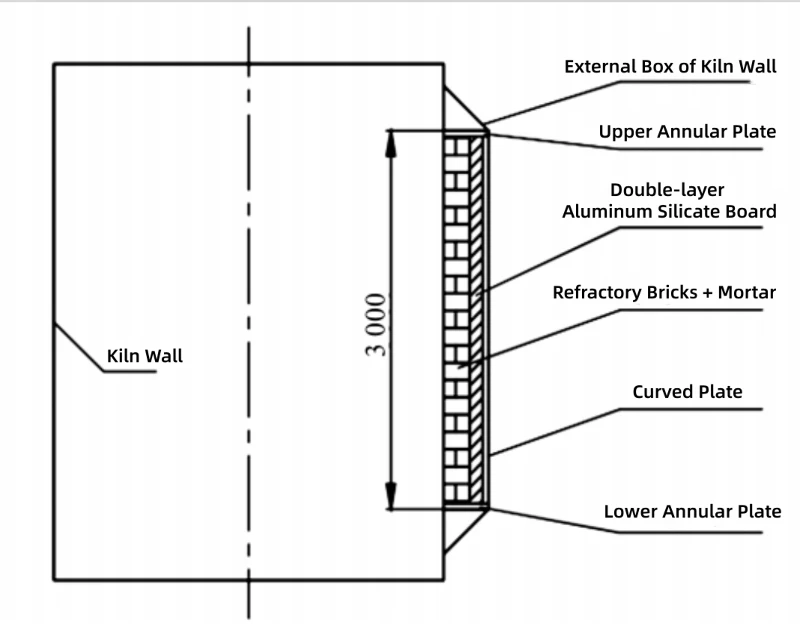
Figure 1 External Box Mounting Method on Kiln Wall
2.2 Method of Injecting High-temperature Resistant Castable inside Kiln Wall
When the damaged area of refractory bricks in the calcination zone is excessively large, the overall supporting strength for the refractory bricks of the upper preheating zone will be lost. There is a risk of large-area collapse during lime kiln operation. Therefore, high-temperature resistant castable needs to be poured into the refractory brick layer of the lime kiln to fill the eroded and missing refractory bricks and improve the overall strength of the kiln refractory lining.
Take an erosion area of 1500 mm (height) × 2200 mm (arc length) as an example. The specific repair procedures are as follows:
1)Weld gantry guide frames on kiln wall: Taking the horizontal elevation of the detected eroded area as the boundary, weld gantry guide frames upward. The spacing between adjacent gantry guide frames shall not exceed 300 mm, and the uppermost guide frame shall not go beyond the upper edge of the eroded zone. These frames are used to fix the pins inserted from outside the kiln wall and ensure the pins are perpendicular to the kiln wall. It is estimated that five rows of guide frames need to be welded.
2)Support by driving pins: Drill holes on the kiln wall corresponding to the guide holes of all gantry frames. Drive pins into the kiln through the guide holes on gantry frames and the holes on kiln wall. The penetration depth shall be no less than 800 mm, and the spacing between adjacent pins shall not exceed 150 mm. The pins support the ash layer above to prevent massive collapse and outflow of upper ash and stone blocks during hole cleaning of the lower section, which may cause personal injury.
3)Hole cleaning for the first layer: After all supporting pins are installed, drill holes sequentially from bottom to top and from east to west at the bottom of the eroded zone. The size of a single opening shall not exceed 500 mm (width) × 200 mm (height). After opening, use prefabricated hooks to pull out internal ash, stones and loose refractory bricks on both sides. Clean the bottommost refractory bricks to form a flat horizontal plane with an excavation depth of approximately 800 mm until the intact and non-spalled refractory brick surface is exposed. Repeat the above process to thoroughly clean the entire area. During opening, at least 2 strips of kiln shell plates with sufficient width shall be reserved longitudinally within the whole eroded zone to guarantee the overall strength of the opened area.
4)Formwork erection for the first layer: After cleaning, erect carbon steel formwork vertically close to ash deposits. Make the outer arc of the formwork as flush as possible with the inner surface of the existing refractory bricks.
5)Restoration of openings for the first layer: Use round steel to make hooked rebars, which shall be welded to the inner side of the cut first-layer steel plate. Weld the steel plate with hooked rebars at the opening position to improve the overall stability of castable.
6)Hole cleaning for the second layer: Repeat the hole cleaning procedures for the first layer, and re-clean the area below the second row of pin supports.
7)Casting of castable for the first layer: Pour pre-mixed castable into the kiln through the square openings of the second layer. Stop pouring when the castable is 50 mm away from the first row of pins. Use vibrators during casting to homogenize the castable and reduce voids inside the castable.
8)Remove the first row of pins: Take out the first row of pins and gantry frames one by one.
9)Inspection of refractory bricks: Repeat the above maintenance procedures until the area below the fourth row of pins is cleaned. Drill an inspection opening at the upper edge of the eroded zone, with dimensions no larger than 200 mm (height) × 500 mm (width). Drill holes from east to west and bottom to top. After opening, clean refractory bricks from outside inward to inspect brick conditions, and find the elevation where all three layers of refractory bricks remain intact without spalling.
10)Support by driving pins: Drive pins into the kiln closely below the bottom edge of refractory bricks. The penetration depth shall be no less than 800 mm, and the spacing between adjacent pins shall not exceed 150 mm. At least 200 mm of each pin shall be reserved outside the kiln, and fixed to the upper kiln wall with stiffener plates, to prevent collapse and outflow of refractory bricks and ash blocks that may result in personal injury.
11)Hole cleaning: Perform hole cleaning construction following Step 3).
12)Formwork erection: After cleaning, erect carbon steel formwork vertically close to ash deposits. Make the outer arc of the formwork as flush as possible with the inner surface of the existing refractory bricks.
13)Remove the fourth row of pins: After completing cleaning of the fifth layer, take out the fourth row of pins and gantry frames one by one.
14)Casting of castable: Evenly drill 3 square openings above the fifth row of pins. Pour castable through these openings to fill the gap above refractory bricks and around the fifth row of pins. Cut off the part of fifth-row pins exposed outside the kiln wall.
15)After casting each layer of castable, vibrate the castable thoroughly with vibrators to reduce internal voids.
Due to the large number of construction steps above, Figure 2 only illustrates the main construction procedures.
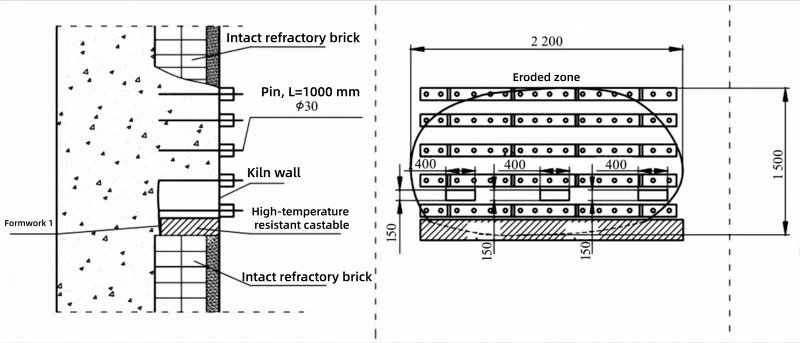
Figure 2 Hole Opening and Castable Pouring
3.Summary of Repair Methods
The external kiln wall box mounting method features high repair efficiency and low risk factor. However, when the repair area exceeds 20 m², it will exert a certain impact on the overall wind resistance of the lime kiln. The method of injecting high-temperature resistant castable inside the kiln wall is applicable to large-area kiln wall repair, yet it requires a long maintenance period.
The above two repair methods can be reasonably selected according to actual site conditions. They can effectively prevent kiln wall fire leakage caused by damaged refractory bricks in the calcination zone of lime kilns, extend the service life of equipment, and avoid unit overhaul triggered by damage of inner refractory lining. Moreover, these two methods are also available for repairing kiln wall fire leakage induced by the same causes at other positions of the lime kiln.