


The aluminum melting furnace is a new type of high-efficiency energy-saving thermal equipment developed for aluminum smelting processes. It can well meet the requirements in aluminum smelting, such as strict control of alloy composition, discontinuous production and large single-furnace capacity. It achieves multiple benefits including reduced consumption, lower burning loss, improved product quality, decreased labor intensity, better working conditions and higher production efficiency. It is suitable for intermittent production, alloy preparation and smelting with large quantities of return scrap.
Main Types of Aluminum Melting Furnaces
Aluminum melting furnaces are mainly constructed in rectangular or circular structures. Reasonable structural design can significantly improve heat transfer performance, increase melting capacity and cut energy consumption.

Circular Aluminum Melting Furnace
With the same capacity, a circular furnace has a larger inner volume and higher volumetric thermal intensity than a rectangular furnace, delivering a higher melting rate. Meanwhile, the circular structure facilitates burner installation, helps form rational gas flow inside the furnace, improves heat exchange efficiency and reduces energy consumption for aluminum melting. In addition, the top-opening charging mode allows rapid furnace loading within a short time, shortens charging duration and boosts loading efficiency. Relying on self-weight, sealing between furnace cover and furnace body is easier to achieve. Therefore, most large-scale aluminum melting furnaces newly built in China in recent years adopt circular structures.

Rectangular Aluminum Melting Furnace
For circular furnaces, furnace cover opening and slag skimming require higher workshop height and occupy 2~3 furnace positions, leading to low workshop space utilization and much higher infrastructure investment. For this reason, many manufacturers choose rectangular aluminum melting furnaces.
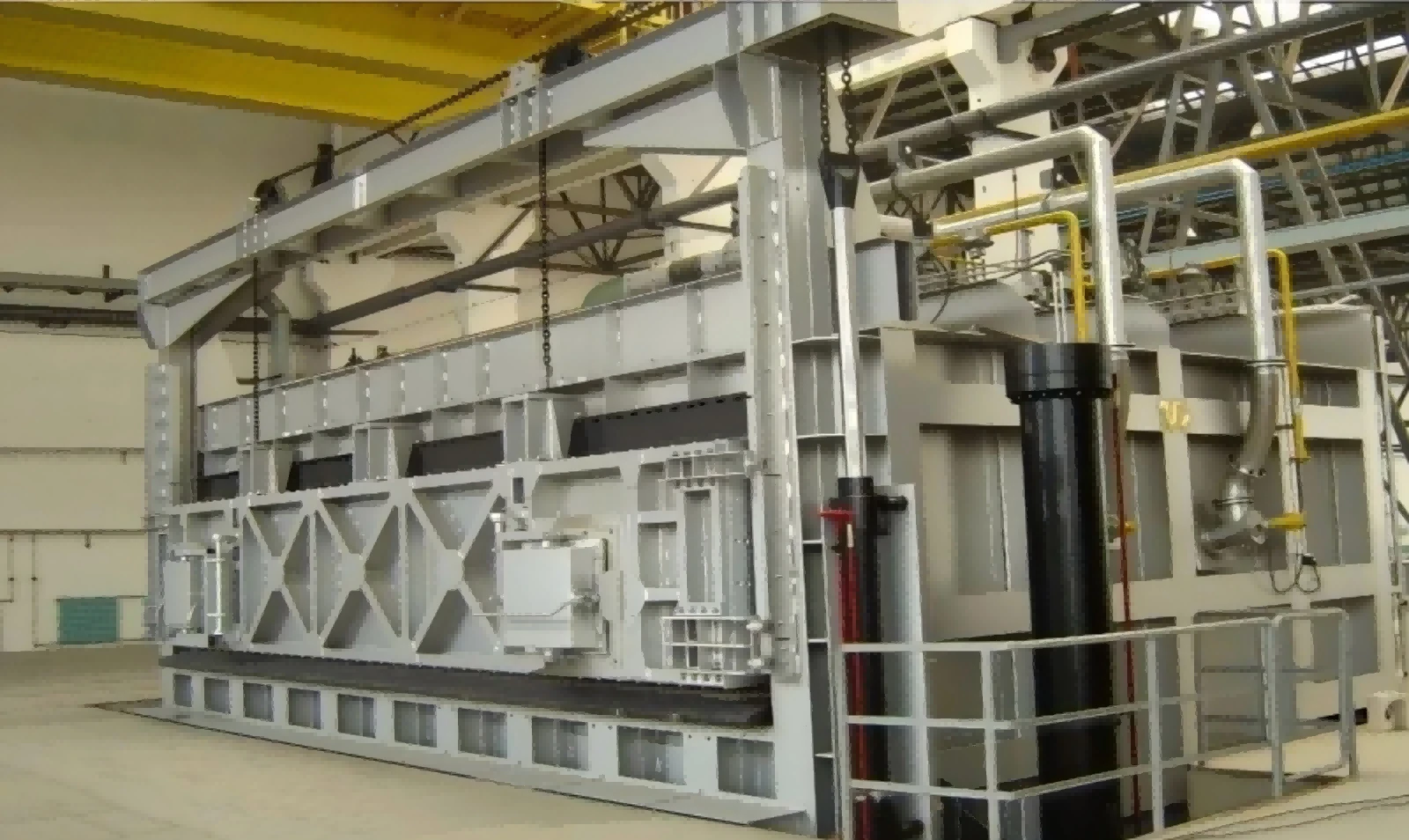
Vertical Aluminum Melting Furnace
Vertical furnaces are widely used in small and medium-sized enterprises and die-casting industries. A vertical flue with large cross-section is installed at the furnace tail, and high-speed burners are mounted at the bottom of the flue. Aluminum ingots and raw materials are fed from the top of the flue and rapidly melted by flame impact at the bottom. Flue gas fully exchanges heat with cold incoming materials before discharge. Thus vertical furnaces feature high thermal efficiency, normally above 50%, with favorable energy consumption indicators.
Operating Precautions for Aluminum Melting Furnaces
1) After starting and heating the furnace, adjust heating parameters. Formal smelting production can only proceed once parameters stabilize.
2)Before startup, inspect feeding & discharging devices, circulating water, air pressure, limit switches and manual/automatic switches to ensure they are in required positions. Verify that materials on the workbench meet forging requirements. Keep constant monitoring of cooling water, the lifeline of induction furnaces. The outlet water temperature shall not exceed 60℃.
3)Load materials properly during charging. Large aluminum pieces must be pre-treated before feeding. Place irregular sides upward as much as possible to prevent jamming and damage to furnace lining.
4)For the first heating of a cold furnace, rated power cannot be used immediately. Apply 60%–75% of normal rated power for low-temperature heating to avoid cracks in refractory lining. When the lining temperature evenly reaches around 90℃, raise power to normal process power to start formal production.
5)Do not store blanks of two different parts simultaneously at the furnace front and workbench. Operators shall pack remaining heated blanks into material boxes before shift end and mark blank specifications and status. Red-hot materials inside the induction furnace shall be completely processed. The medium-frequency heating furnace is a type of electric heating furnace with many advantages: fast temperature rise, low oxidation and decarburization, favorable working conditions and easy mechanization & automation. However, its adaptability to changes in blank size and shape is limited. When blank dimensions vary within specified ranges (such as shorter length or new blank sizes), blank feeding and pushing cannot be operated arbitrarily. Relevant feeding calculation must be performed according to inductor design requirements to guarantee heating quality and avoid heating defects.
6)Optimize furnace structural design to improve effective energy utilization. Major factors affecting efficiency include refractory materials, thermal insulation materials, furnace structure, control system and burner system. Refractory and insulating materials feature excellent heat resistance and thermal insulation to reduce energy consumption and strengthen energy-saving performance.
Common Faults and Treatment for Aluminum Melting Furnaces
Material Jamming
Check for foreign objects inside the furnace and remove them immediately if found. If excessive feeding during ignition jams the feeding shaft, reduce feeding quantity before re-ignition.
Backfire
Check whether the chimney outlet is unobstructed; clear ash inside the chimney if blocked. Check ash accumulation between crucible and furnace wall and remove ash promptly. Clean debris if the flame nozzle is clogged.
Black Smoke
Increase air supply frequency or reduce feeding frequency until parameters return to normal. Inspect coke buildup on the furnace bridge of combustion chamber and clean it thoroughly.
No system response upon startup
If the current board fails, repair or replace it. Over-current or over-voltage triggers protection action. Main switch not fully closed: close the main switch. Damage or wire breakage of power regulating potentiometer: carry out immediate repair.
Only DC voltmeter displays, no other response
Fault in inverter circuit board and inverter. Inverter power system failure; no 22V power supply for inverter pulse.
Occasional frequency noise on startup with swinging meters, or meter swing and power cannot rise after startup
Repair promptly when inverter control board works abnormally. Recalibrate the operating angle if improperly adjusted. Furnace short circuit or earthing; short circuit on the output side of voltage loop.
Periodic Maintenance Measures for Aluminum Melting Furnaces
Clean the power cabinet frequently, especially dust on silicon-controlled rectifiers. Although dedicated computer rooms are available for variable frequency control core cleaning, the actual working environment during smelting and forging is harsh with heavy dust and vibration. During medium-frequency furnace thermal quenching, equipment is often installed near pickling and phosphating facilities which generate large amounts of corrosive gas. Such gas damages components, reduces insulation strength and frequently causes surface discharge. Regular cleaning is required to prevent equipment failure.
Inspect pipe joints regularly for waveform distortion. Tap water cooling may cause plastic pipe aging and rupture and impair cooling performance. Closed circulating water systems are recommended. Condensation easily occurs on cooling water in summer operation, so a circulating water system shall be adopted.
Perform regular inspection and maintenance on equipment. Check tightening of all bolts, nuts and crimping connections; maintain contactors and relay contacts. Repair or replace loose or poorly contacting components in a timely manner. Do not run equipment with defects to avoid serious accidents.
Regularly check correctness of load wiring and reliability of insulation. Remove scale accumulated inside the heat penetration induction coil in a timely manner. Replace medium-frequency furnace promptly if cracks appear on thermal insulation lining. After installing new furnace lining, inspect the load of insulated variable frequency control devices.
When cooling water quality is poor, key furnace components need regular replacement or cleaning. For example, SCR components are prone to damage when cooling jackets and control cabinets have insufficient cooling.