


The main components of mullite are alumina and silicon oxide, which is the mineral name of alumino-silicates, it is a mineral formed by alumino-silicates through high temperature conditions, and mullite is also formed when artificially heating alumino-silicates. In recent years, China has been increasing the clean use of coal resources, power plant generation of fly ash also contains mullite phase, including Jungar power plant pulverized coal furnace fly ash in the mullite content of about 40%. The chemical composition of mullite is 3Al2O3-2SiO2-2Al2O3-SiO2, and from the perspective of phase diagram, mullite is the only stable crystalline aluminum silicate in the binary phase diagram system. Its crystal structure is composed of silica-oxygen tetrahedra and aluminum-oxygen tetrahedra arranged along the C-axis in a disorderly manner to form a double chain, and the double chain is connected by aluminum-oxygen octahedra, in which aluminum-oxygen octahedra play a role of backbone support in the whole structure, and the non-metric amplitude modulation of the two kinds of ordering mode makes it have a stable energy, and thus mullite has a very good chemical stability. At the same time, it also has good refractoriness, electric insulation and other properties, resistance to chemical erosion, good shock resistance, high load softening temperature, creep resistance, is now widely used in metallurgy, chemical industry, petroleum, electric power, national defense and many other industrial fields.
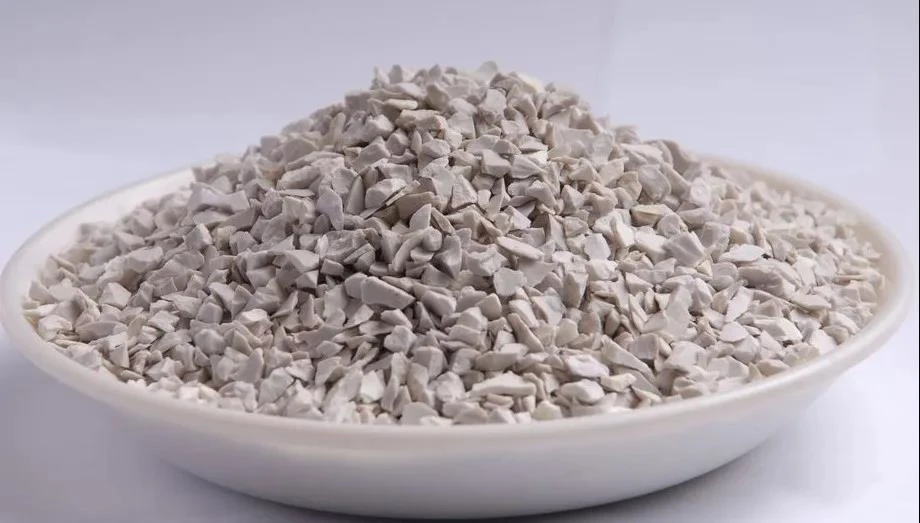
In recent years, with the rise of mullite and its composite novel materials, it has caused domestic and foreign researchers to pay great attention to mullite materials.This paper focuses on the review of the physical and chemical properties of mullite, the preparation method of high-purity mullite, and its application in the field of refractory materials and electricity.
Physical and chemical properties of high purity mullite
The physical and chemical properties of high purity mullite are shown in the table.

Preparation method of high purity mullite material
Sol-gel method
Sol-gel method is a metal alcohol salt or inorganic material as a precursor for the preparation of materials, firstly, the raw materials are mixed uniformly, then hydrolysis, condensation chemical reaction, the formation of a stable and transparent sol-gel system solution in solution, and finally the sol-gel by the aging of the gel particles through the slow polymerization of the gel through the formation of a multi-dimensional network structure, multi-dimensional network structure filled with non-flowing solvent, and ultimately the formation of the The inorganic functional materials can be prepared by drying the gel to remove the organic matter.
Luo Fa et al. synthesized mullite ceramic functional materials by Sol-Gel method using aluminum powder, ethyl orthosilicate (TEOS), and HCl as raw materials, and they investigated the relationship between sintering densities, microwave dielectric properties, sintering additives MgO, and test frequencies of mullite ceramic materials. The results of the study showed that the sintering conditions used for the preparation have a great influence on the sintering density and dielectric constant of mullite ceramic materials, and the hot pressing temperature has the greatest influence on the sintering density and complex dielectric constant of mullite ceramic materials among the parameters studied. The addition of the additive MgO also increases the real and imaginary parts of the complex dielectric constant of mullite ceramic materials, and there is no significant dispersion effect on the complex dielectric constant.
He Wen et al. studied the preparation of dry gel ultrafine powder by using TEOS and Al(NO3)3-9H2O as raw materials, by sol-gel (Sol-Gel) method, by solvent replacement into alcohol gel, and by using CO2 supercritical fluid to carry out low-temperature extraction and drying technology on the alcohol gel, and then after 1150 ℃ high temperature heating treatment for 2h, it can be relatively easy to prepare high purity mullite ultrafine powders. The mullite powder can be easily prepared with high purity by heating at 1150℃ for 2h. The prepared mullite powder has a particle size of 5~15 nm, its specific surface is as high as 376 m2/g, and the particles are uniformly distributed, showing a short needle or short column shape.
Zhang Xintao used aluminum nitrate and ethyl orthosilicate as raw materials, sol-gel (Sol-Gel method) method to prepare mullite powder functional materials, through the high temperature heat treatment at 1300 ℃ for 2h, the prepared powdered mullite materials, showing excellent performance, such as low dielectric properties, its relative dielectric loss and dielectric constant will increase with the increase of mullite content, the dielectric loss will be with the increase of sintering temperature, the dielectric loss will show a decreasing trend with the rise of sintering temperature. elevation shows a decreasing trend.
Hydrothermal crystallization method
Hydrothermal crystallization is usually carried out in a closed special reactor vessel, such as an autoclave and other special equipment, where an aqueous solution is used as the medium for the hydrothermal reaction, and the reactor generator is heated, by creating a high-pressure, high-temperature reaction environment, which makes the substances that are difficult to be dissolved or insoluble under normal conditions to be dissolved and form highly dispersed nanocrystalline nuclei by recrystallization, which is known as the hydrothermal crystallization method. Using natural minerals, Yinye Wang et al. synthesized composite nanocrystalline materials with mullite as the main crystalline phase by hydrothermal crystallization. The researchers heated their composite nanocrystals at temperatures ranging from 500°C to 1005°C and found that the composite nanocrystals had very good chemical thermal stability. Tested by TPR technique, the results showed that the composite material has a structural effect on the carrier and consumes different amounts of hydrogen with the surface structure of the crystals.
Hydrolysis precipitation method
Hydrolytic precipitation method refers to first adding precipitant to the clarified solution to get the precipitate, and then calcine the precipitate at high temperature to make it decompose, and finally get the powder material. Hydrolytic precipitation method is divided into co-precipitation method and single-phase precipitation method. Co-precipitation method is to add the precipitant into the solution to form a precipitate; the latter will first dissolve the precipitant in the solution, and then change the pH value of the solution through the decomposition of the precipitant after complete dissolution, and finally form a precipitate. The researcher Zhang Zhijie used Al13 and activated silicic acid as the raw materials, and firstly synthesized mullite precursor by hydrolysis precipitation method, which was heat-treated at a temperature of less than 900 ℃ for about 1h, and formed the mullite crystal phase. The hydrolytic precipitation method synthesizes mullite at a lower temperature, which reduces the preparation difficulty and has the advantage of low-temperature synthesis.
Application of mullite
Application of mullite in the field of refractories
In recent years, the development of mullite refractories is very rapid, with the continuous progress and improvement of industrial technology, mullite new materials not only to meet the petroleum, chemical and other high-temperature industry rapid growth in demand, but also to meet the high-temperature industry technology continues to progress the new requirements. Nowadays, the refractory materials used in industry can be prepared from oxides such as silicon oxide, calcium oxide and alumina. Mullite as a high-performance refractory material, it has:
(1) High melting point; and
(2) Uniform expansion; and
(3) Excellent thermal shock stability.
(4) High load softening point.
(5) Low creep value at high temperature.
(6) High hardness; and
(7) Good chemical resistance and other advantages.
New refractory materials prepared from mullite are now widely used in muffle furnaces, calciner furnaces, boilers, rotary kilns and other high temperature equipment. High temperature equipment prepared from mullite is not only resistant to high temperature, but also has a long service life and corrosion resistance. Mullite and other high-quality materials to complement each other, composite synthesis of more excellent performance of refractory materials. Such as the use of cordierite - mullite composite synthetic ceramic kiln materials, the preparation of materials with a small coefficient of thermal expansion, excellent thermal shock resistance, high refractoriness, high temperature stability. Therefore, at present, domestic and foreign high-grade ceramic kiln commonly used cordierite mullite composite materials. In short, mullite refractory materials are more and more important to people, I believe that there will be more excellent performance of mullite refractory materials.
Mullite in electrical applications
Modern computer systems are composed of ultra-high performance integrated circuits, which has led to the extensive study of low dielectric constant ceramic substrates. Low dielectric constant ceramic substrates are characterized by three features:
(1) Can be sintered to certain metals; and
(2) Can assume high line densities; and
(3) has a low coefficient of expansion and matches the thermal expansion coefficient of silicon.
The application of mullite in the field of electrical properties is reflected in its use as an excellent substrate material, which has a very low dielectric constant and can assume high line densities. Therefore, mullite ceramics and mullite-based glass-ceramic composites are used as excellent functional materials for high performance integrated circuits.
Jin Zhengguo et al, conducted a study on the application of mullite ceramics in the field of electricity, with the different mullite content, the dielectric properties and dielectric loss also produce changes in the composite material when the mullite content w=70%~90%, the dielectric constant changes in 6.0~7.0. The new type of mullite ceramic substrate material has a low dielectric constant, a low coefficient of thermal expansion, and good strength, which is suitable for high-speed integrated circuits and microelectronics assembly. The new mullite ceramic substrate material has low dielectric constant, low thermal expansion coefficient, good strength, and is suitable for application in high-speed integrated circuits.
Wang Jing prepared carbon nanotube mullite composites. On the basis of the good performance of mullite ceramic materials, by adding carbon nanotubes to improve its toughness, the study of the use of carbon nanotubes after the modification of the special electrical properties of mullite materials after the conductive properties of the conductive properties of the mechanical, thermal and other properties. The results of the study show that the various properties of the material have achieved a large improvement. Among them, the electrical conductivity is improved by more than 10 orders of magnitude; the electrical constant is improved by 10-30 times, and the loss is improved by 3 orders of magnitude; the fracture toughness is improved by up to 80%. This material has the advantages of both mechanical and electrical complex phase materials, and has significant application prospects in the field of electronic materials. Therefore, the research of new mullite ceramic materials is of great significance.
Mullite in other applications
Mullite, as an excellent chemical material, has many applications in addition to the above mentioned aspects of application research. For example, mullite can be used as permeable ceramic components. This material has high mechanical strength, more uniform distribution of pores, and good air permeability. In addition, mullite composites can be used as catalyst carriers, which have good chemical stability and heat resistance, and can be loaded with a variety of catalysts. The prepared catalysts can be used in petroleum cracking, automobile exhaust treatment and wastewater treatment. Mullite ceramic alloys can also be used for brake pad linings, which use metal alloys as the substrate and other types of ceramics as the dispersion medium. Because the material has better heat and wear resistance than brake materials prepared from polymers, it is now widely used in aircraft and high-speed rail systems, as well as in automotive brake pads.
In recent years, under the continuous efforts of researchers, the development of mullite materials has been very rapid, and their applications have become more extensive, with the emergence of many new mullite materials with excellent comprehensive performance. At present, there are relatively more studies on high-temperature structural materials, ceramic materials and adiabatic insulating materials. In the electrical properties and optical properties of the research is relatively small, there are more problems, in order to get a wider range of applications in the future in the field of electricity, optics and other fields, need to increase the research efforts. Secondly, in the mullite synthesis method, need to be more in-depth analysis of the mechanism of material synthesis, the development of more suitable for the industrialization of advanced methods; in the theoretical aspects of the need to increase the thermodynamics and dynamics of mullite materials; these are conducive to the development of a more comprehensive performance of the new materials. The above research directions are the focus of future research.