




Introduction
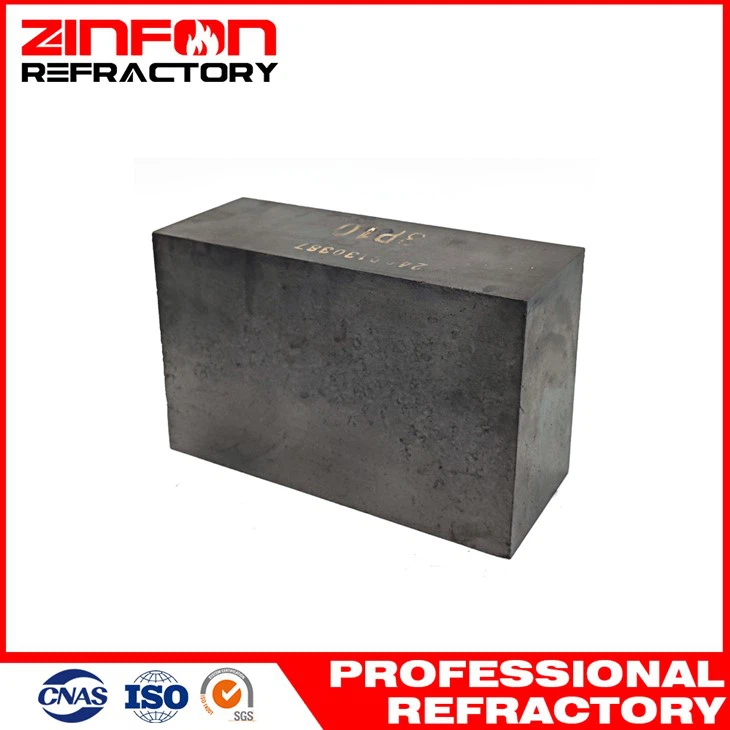
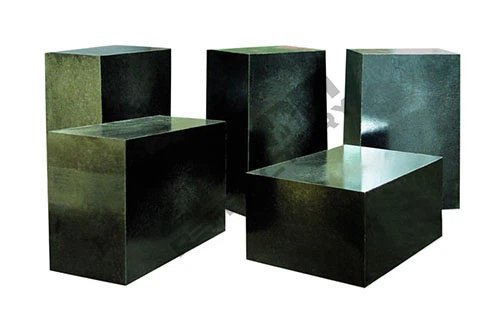
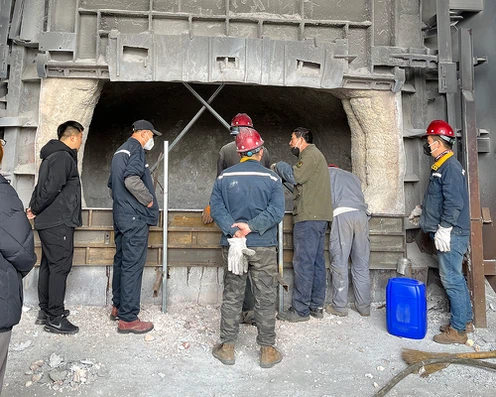
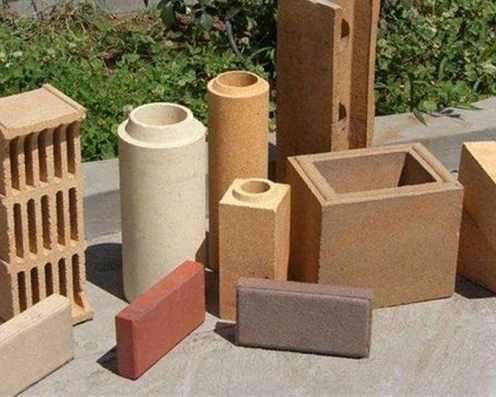
Alumina-magnesia-carbon bricks are refractory products made from premium high-alumina bauxite or corundum sand, magnesia, and flake graphite. To enhance oxidation resistance, additives such as silicon powder, aluminum powder, silicon carbide powder, or ferrosilicon powder are often included. These bricks are bonded with resin, formed under high pressure, and cured at 200–300°C without the need for firing. They are mainly used for lining large converters, ultra-high-power electric arc furnace ladles, and out-of-furnace refining vessels.
Typical composition: MgO 7%–14%, C 5%–12%. These bricks offer excellent slag resistance, thermal shock resistance, and minimal reheat expansion.
Advantage
High temperature resistance: Usable at temperatures between 1600–1800°C, suitable for environments like steelmaking and cement production.
Thermal shock resistance: Graphite's high thermal conductivity reduces temperature gradients, minimizing the risk of spalling.
Resistance to slag erosion: The Al₂O₃-MgO-C composite structure effectively resists penetration by both acidic and alkaline slags.
Mechanical impact resistance: A strong bond and carbon matrix provide excellent wear resistance.
Low coefficient of expansion: Reduced expansion lowers the risk of high-temperature cracking.
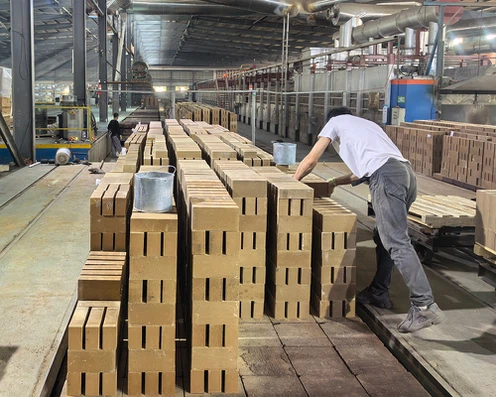
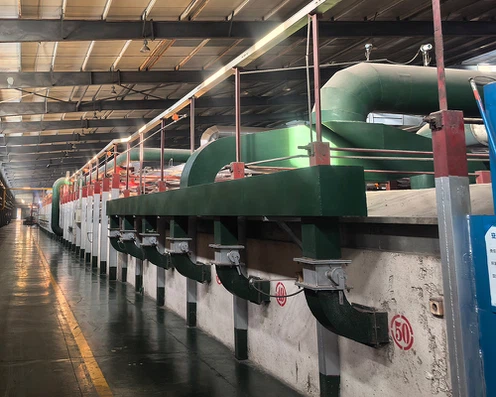
Zinfon Refractory Technology Co.,Ltd.
We provide one-stop services from technical consultation to design, production, and after-sales support.
Physical and Chemical Specifications
|
Item |
Specification |
||||
|
LMT-75 |
LMT-70 |
LMT-65 |
LMT-60 |
LMT-55 |
|
|
Al2O3 % |
≥75 |
≥70 |
≥65 |
≥60 |
≥55 |
|
Al2O3+MgO % |
≥81 |
≥77 |
≥80 |
≥75 |
≥72 |
|
C % |
≥5 |
≥5 |
≥7 |
≥7 |
≥8 |
|
Apparent Porosity, % |
≤7 |
≤7 |
≤7 |
≤7 |
≤7 |
|
Bulk Density, g/cm3 |
≥3.2 |
≥3.15 |
≥3.1 |
≥3.0 |
≥2.9 |
|
CCS, MPa |
≥60 |
≥60 |
≥60 |
≥50 |
≥50 |
Raw Materials
Main Ingredients
Aluminum Oxide (Al₂O₃): Provides high-temperature stability and resistance to slag erosion.
Magnesium Oxide (MgO): Enhances resistance to alkaline slags and improves thermal shock stability.
Carbon (Graphite or Coke): Delivers high thermal conductivity, thermal shock resistance, and mechanical erosion resistance.
Binding agents
Organic binding agents such as phenolic resin or bitumen, which carbonize at high temperatures to form a carbon bonding network.
Metal powders (e.g., Si, Al) may be added as antioxidants.


process
Mixing raw materials → forming (machine pressing or vibration molding) → drying → calcining (high temperature carbonization)
1. Raw material selection and pretreatment
Core raw materials

Pre-treatment steps
Particle Size Optimization: Controlled via ball milling or screening (e.g., "two-stage fine grinding + classification") to ensure densification.
Impurity Removal and Drying: Eliminate iron oxides and dry magnesia sand at 100–150°C to reduce moisture content.
2.Formulation design and mixing
Typical ratios (mass fraction)

Mixing process
Dry Mixing: Aggregate, fine powder, and graphite are dry-mixed for 10–15 minutes to ensure uniform dispersion.
Wet Mixing: Binding agent (resin + solvent) and additives are added and mixed for 20–30 minutes until a homogeneous paste is formed.
3. Molding and Curing
Molding Methods
Machine Press Molding: For large bricks (≥200 MPa). Pressing speed must be controlled to avoid delamination.
Vibration Molding: Used for shaped or complex components, eliminates air pockets through high-frequency vibration.
Isostatic Pressing: For applications requiring high dimensional accuracy (e.g., electrolytic tank linings).
Curing Conditions
Ambient Curing: Natural hardening at room temperature over 24–48 hours; suitable for small batches.
Heat Curing: Heated to 120–150°C to accelerate resin carbonization. Requires nitrogen protection to prevent oxidation.
4. Drying and Firing
Drying Process
Gradual Heating: Temperature raised from 50°C to 200°C to prevent graphite oxidation and cracking.
Humidity Control: Humidity maintained at ≤10%; drying time ranges from 24–72 hours depending on thickness.
Firing Process
Temperature Phases:
Preheating: 200–600°C to remove volatiles.
Carbonization: 600–1000°C to convert resin into a carbon network.
High Temperature: 1400–1600°C to promote Al₂O₃ and MgO reaction, forming spinel.
Protective Atmosphere: Nitrogen or argon is used to prevent graphite oxidation.
5. Post-treatment and inspection
Impregnation: High-porosity products are impregnated with resin or asphalt to increase density.
Surface Coating: Applied SiO₂-Al₂O₃ coatings enhance oxidation resistance.
Comparison: Alumina-Magnesia-Carbon vs. Magnesia-Carbon Bricks
Core Composition Comparison
Alumina-Magnesia-Carbon Bricks: Al₂O₃ (60%–69%) + MgO (7%–14%) + C (5%–12%)
Key Difference: AMC bricks include oxidizing agents to form spinel (MgAl₂O₄), improving performance in certain applications.
Comparison of Application Scenarios

Selection Guidelines
Choose Alumina-Magnesia-Carbon Bricks when:
Resistance to both acidic and alkaline slags is needed (e.g., cement kilns)
Long-term operational stability is a priority (e.g., large converters)
Applications require thermal shock and mechanical impact resistance
Choose Magnesia-Carbon Bricks when:
Only resistance to alkaline slag is needed (e.g., EAF slag lines)
Lower weight and high thermal conductivity are beneficial (e.g., continuous casting slides)
Cost is a significant consideration
Summary: AMC bricks are "all-rounders" offering durability, slag resistance, and thermal shock stability. Magnesia-carbon bricks are "specialists" known for lightweight and high thermal conductivity.
application
Steel industry:
Converter/EAF Linings: Resists steel and slag erosion.
Ladle Linings: Minimizes secondary oxidation and extends service life.
Continuous Casting Systems: Protects critical parts such as tundishes and slide gates.
Cement industry:
Rotary Kiln Firing Zone: Resists clinker melt and alkali vapor attack.
Non-ferrous metal smelting:
Aluminum Electrolyzers, Copper Smelters: Custom formulas adjust for specific working conditions.
AMC Brick Construction Process (Ladle Wall & Bottom)
Construction sequence
Cast permanent layer for ladle wall
Cast permanent layer for ladle bottom
Place water outlet seat bricks and breathable bricks
Lay AMC bricks for ladle bottom
Fill gaps with corundum cement
Lay AMC bricks for ladle wall and slag line
Install aluminum-magnesium castable at ladle mouth
Cure and bake
Wall Masonry Guidelines
Use aluminum-magnesium fire clay. Mortar must not be too thin; joints should be full and less than 1 mm thick.
Bricks should be laid level with staggered joints. Follow the principle of "solid back, tight seams, accurate arc."
Hinge cutting depth should be ≥50 mm, away from the trunnion. Stagger hinges between layers by ≥200 mm.
Bottom Masonry Guidelines
Breathable bricks and seat bricks must be positioned flat and accurately.
Fill all surrounding gaps with corundum cement.
Casting Construction
Inspect equipment (mixer, water supply, vibrating rods).
Mix dry for 1 minute, then add 2/3 of the water, then the rest. Wet mix for 3–5 minutes.
Vibrate after each pouring step to exhaust air and ensure full compaction.
Maintain continuity during pouring; interruption should not exceed 20 minutes.
Repair Procedure
Remove worn seat bricks and old bonding material, then clean thoroughly.
Install new breathable and seat bricks.
Fill gaps with corundum binder.
Why chooes us?
01/Customized dimensions and shapes
-

Customized Brick Shape
Provide Sample Sheets--Mold Opening & Quotation--Mold Opening & Sample Making--Bulk Production Quotation--Contract Signing--Bulk Production
02/Delivery cycle and logistics
-
Sea freight, land freight. Determine the mode of transportation according to the needs
About 30 days, customized products delivery time depends on the actual situation.
03/Customized packaging
-
Customize your brand
Logo customization, custom fonts, taglines and messages for packaging, signage, websites or printed materials.
Take your brand to the next level, contact us today to discuss your project!


04/Purchase ZINFON refractory Bricks at Reasonable Prices
-
The price of refractory bricks is a known key factor influencing customers' purchasing decisions. Therefore, we offer affordable refractory bricks for sale. Here are several reasons why ZINFON provides refractory bricks at competitive prices:
Factory price
By collaborating with ZINFON, we ensure that customers enjoy the ex-factory price of refractory bricks, reducing costs from middlemen or distributors. This allows customers to obtain the most cost-effective pricing directly from the source.
Low raw material cost
ZINFON is surrounded by abundant mineral resources. With these high-quality materials, customers can obtain products that are both affordable and excellent in performance.
Mass production
ZINFON possesses advanced production equipment and technologies, enabling the factory to achieve economies of scale and reduce unit production costs. Meanwhile, it ensures a continuous supply of high-quality products at preferential prices.
It is worth noting that while price is an important factor, it should not be the sole determinant of your purchasing decision. When buying refractory bricks from ZINFON, quality, reliability, and technical support are equally important considerations.
By choosing ZINFON as your supplier, you can access high-quality refractory bricks, a wide range of other refractory materials, and comprehensive support. Contact ZINFON Refractories immediately to discuss your specific requirements and obtain customized solutions!
7*24 hours online response
Provide professional after-sales protection
Our address
Qinghua Management Dist., Dashiqiao City, Yingkou City, Liaoning, China
Phone Number
+8613700131695
+8618540210631
info@zinfon-refractory.com

Hot Tags: alumina magnesia carbon brick, China alumina magnesia carbon brick manufacturers, suppliers, factory, Magnesia Brick for Electric car bottom furnace, Magnesia Carbon Brick for Steel Teeming Ladle, Magnesia Refractory Brick, magnesia brick, magnesia material, magnesia spinel bricks