



Introduction
Low cement castables are a type of refractory material with minimal binder content. Their key feature is the use of ultrafine particles no larger than 1μm, significantly improving thermal shock resistance, slag resistance, and corrosion resistance-often surpassing similar refractory bricks. Further reductions in binder content can yield ultra-low-cement or even cement-free castables.
Compared with traditional refractory castables, which contain 15%–20% cement, low-cement castables use only about 5%, with some formulations as low as 1%–2%. This reduction enhances the refractory performance.
These castables achieve high performance through the inclusion of several specialized materials:
Calcium Aluminate Cement: With a high CaO·Al₂O₃ content, only a small amount is needed to reach the required strength.
Silica Fume: Composed of 93%–98% SiO₂ and with an average particle size of about 0.5μm, it enhances flowability, reduces water demand, and lowers sintering temperature.
Alumina Micropowder: Improves refractory performance by readily participating in high-temperature reactions.
Water Reducers: Adsorb on powder surfaces to create electrostatic repulsion, dispersing powders effectively and enhancing the function of micro powders.
Low-cement castables are advanced refractory materials developed using rheological principles, close packing theory, and ultrafine powder technology.
Features and Technical Advantages
Core Functions of Low Cement Content
Reduction of Impurities and Low-Melting Phases: Components such as CaO in cement readily react with aggregates to form low-melting compounds that degrade performance. Low-cement formulations minimize these reactions, improving high-temperature strength, erosion resistance, and refractoriness under load.
Improved Volume Stability: Minimizes shrinkage from cement hydration, reducing the risk of cracking and enhancing structural stability.
Synergistic Effects of Micropowders and Dispersants
Pore Filling: Microparticles (<1μm) fill voids between aggregates, resulting in a denser structure that improves strength and resistance to penetration.
Efficient Dispersion and Water Reduction: Dispersants lower viscosity, maintaining good workability despite low cement and water content-ideal for vibration casting.
Superior Comprehensive Properties
Thermal Shock Resistance: Low cement content and dense structure reduce thermal stress, minimizing cracking or spalling under rapid temperature changes.
Erosion Resistance: Dense matrix resists chemical attack and penetration from high-temperature melts (e.g., molten steel, glass, slag).
Construction Convenience: Although mechanical mixing is required, formulations can be tailored for different applications such as casting, ramming, and gunning.
Extended Service Life: Improved properties result in longer kiln lining life and lower maintenance costs.
Main components and classifications
Aggregate
Common types include corundum, mullite, high-alumina, magnesia, and silicon carbide. The aggregate determines the material's high-temperature resistance and erosion resistance.
Matrix
Binders: Primarily calcium aluminate cements (e.g., CA-50, CA-70). Some ultra-low cement types use only micropowder (cement <1%).
Micropowders:
Silica: Improves mid-temperature strength.
Alumina: Enhances high-temperature performance.
Spinel: Boosts thermal shock resistance.
Additives: Dispersants (e.g., sodium hexametaphosphate), accelerators/retarders, and anti-explosion fibers (e.g., metal or organic fibers).
Classification Methods
By Cement Content:
Low-cement (LC): 1%–5%
Ultra-low-cement (ULC): <1%
Cement-free (NC): Pure micropowder bonding
By Aggregate Type: High-alumina, corundum, magnesia, silicon carbide, etc.
Physical and Chemical Specifications
| Grade / Specifications |
NDL-60 |
NDL-70 |
NDL-75 |
NDL-80 |
|
|
Al2O3 % ≥ |
60 |
70 |
75 |
80 |
|
|
Bulk Density (g/cm3) ≥ |
110℃ x 24 hr |
2.30~2.40 |
2.40~2.50 |
2.50~2.60 |
2.60~2.80 |
|
1500℃ x 3 hr |
2.35 |
2.55 |
2.65 |
2.75 |
|
|
Linear Change (%) |
1500℃ x 3 hr |
±0.5 |
±0.5 |
±0.5 |
±0.5 |
|
Crushing Strength (Mpa) ≥ |
110℃ x 24 hr |
35 |
40 |
45 |
45 |
|
1500℃ x 3 hr |
60 |
70 |
70 |
80 |
|
|
HMOP Hot Modulus of Rupture (Mpa) ≥ |
110℃ x 24 hr |
5 |
6 |
7 |
8 |
|
1500℃ x 3 hr |
8 |
10 |
10 |
10 |
|
|
Classification Temperature (℃) |
1350 |
1450 |
1550 |
1600 |
|
Features
Low Porosity: Features low porosity, small pore size, high density, and good volume stability.
High Strength: Maintains high strength with low water addition.
Enhanced Thermal Shock Resistance: Unlike traditional castables that weaken significantly at 800–1200°C, low-cement types retain or even improve their strength as temperature rises.
Applications
Low-cement castables are widely used in critical parts of industrial kilns that face high temperatures, corrosion, and mechanical wear:
Metallurgical Industry: Blast furnace stacks, hot blast stoves, ladle slag lines, tundish working layers.
Building Materials Industry: Burning zones of cement kilns, decomposition furnaces, and elbows of tertiary air ducts.
Chemical & Energy Industry: Gasifier linings, incinerator combustion chambers, regenerators in glass kilns.
Other High-Temperature Equipment: Walls of heating furnaces, boiler linings, waste incinerators, etc.
Why chooes us?
01/Delivery cycle and logistics
Sea freight, land freight. Determine the mode of transportation according to the needs
About 30 days, customized products delivery time depends on the actual situation.
02/Customized packaging
Customize your brand
Logo customization, custom fonts, taglines and messages for packaging, signage, websites or printed materials.
Take your brand to the next level, contact us today to discuss your project!


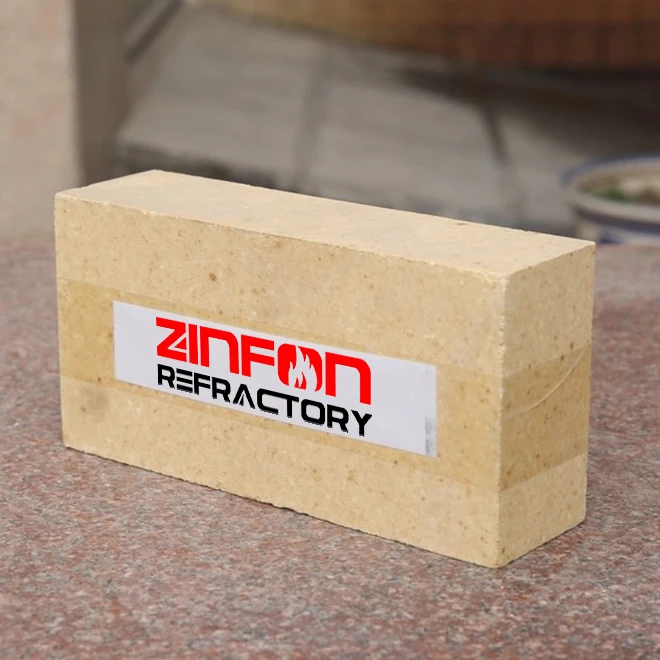


03/Purchase ZINFON Monolythic Refractory at Reasonable Prices
The price of Monolythic Refractory is a known key factor influencing customers' purchasing decisions. Therefore, we offer affordable Monolythic Refractory for sale. Here are several reasons why ZINFON provides Monolythic Refractory at competitive prices:
Factory price
By collaborating with ZINFON, we ensure that customers enjoy the ex-factory price of Monolythic Refractory, reducing costs from middlemen or distributors. This allows customers to obtain the most cost-effective pricing directly from the source.
Low raw material cost
ZINFON is surrounded by abundant mineral resources. With these high-quality materials, customers can obtain products that are both affordable and excellent in performance.
Mass production
ZINFON possesses advanced production equipment and technologies, enabling the factory to achieve economies of scale and reduce unit production costs. Meanwhile, it ensures a continuous supply of high-quality products at preferential prices.
It is worth noting that while price is an important factor, it should not be the sole determinant of your purchasing decision. When buying Monolythic Refractory from ZINFON, quality, reliability, and technical support are equally important considerations.
7*24 hours online response
Provide professional after-sales protection
Our address
Qinghua Management Dist., Dashiqiao City, Yingkou City, Liaoning, China
Phone Number
+8613700131695
+8618540210631

By choosing ZINFON as your supplier, you can access high-quality refractory bricks, a wide range of other refractory materials, and comprehensive support. Contact ZINFON Refractories immediately to discuss your specific requirements and obtain customized solutions!
Hot Tags: low cement castable, China low cement castable manufacturers, suppliers, factory, lightweight refractory castable, castable price, castable refractory adalah, high alumina castable, low cement castable refractory, alumina castable refractory