




Introduction
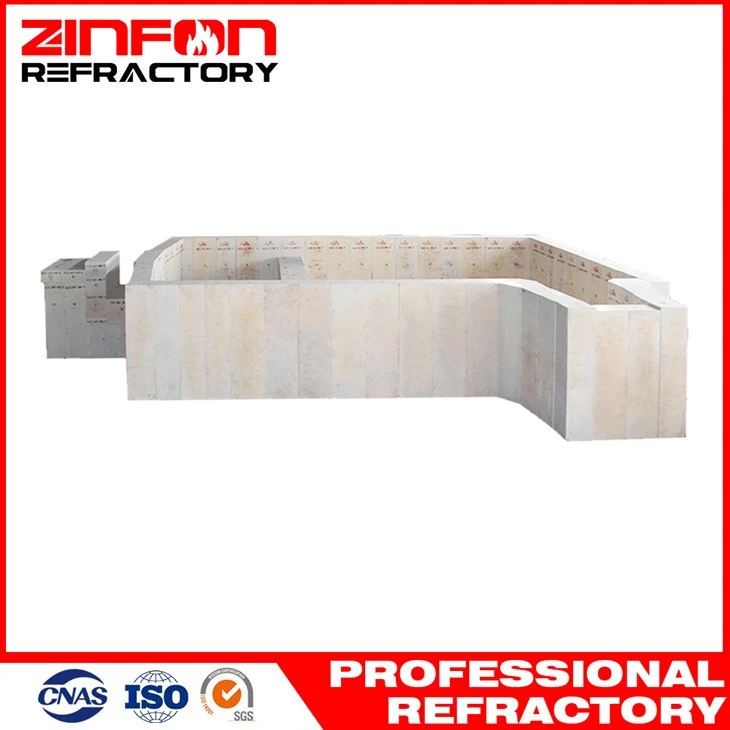
The production of electrocast zirconia-corundum (AZS) bricks requires a precise electrofusion process. In an electric furnace, high-purity raw materials such as alumina and zirconia are melted at elevated temperatures. By controlling temperature and pressure, the melt is homogenized and densified. After cooling and solidification, electrocast zirconia-corundum bricks are formed.
Advantage
Suited for kilns with frequent start-stops or large temperature fluctuations (e.g., batch glass kilns, heat treatment furnaces).
Flexural strength: 40–60 MPa, resisting breakage from mechanical stress.
Zinfon Refractory Technology Co.,Ltd.
We provide one-stop services from technical consultation to design, production, and after-sales support.


Raw Materials
| Component | Content Range (Mass Fraction) | Functions and Characteristics |
| Alumina (Al2O3) | 45% - 55% | - Provides high refractoriness and mechanical strength, serving as the basic component for high - temperature resistance. - Enhances the ability to resist glass liquid erosion. |
| Zirconia (ZrO2) | 30% - 45% | - Significantly improves corrosion - resistance and erosion - resistance properties, especially in resisting glass liquid penetration. - Improves thermal stability and inhibits crack propagation. |
| Silica (SiO2) | 15% - 20% | - Regulates the fluidity of the melt, influencing the molding and density of the brick body. - Forms a low - melting eutectic with other components, so the content needs to be controlled to avoid reducing the refractoriness. |
Physical and Chemical Specifications
| Grade / Specifications |
AZS-33 |
AZS-36 |
AZS-41 |
|
|
SiO2 % |
15 |
13 |
12 |
|
|
Al2O3 % |
Rest |
Rest |
Rest |
|
|
ZrO2 % |
33.5 |
36.5 |
41 |
|
|
Fe2O3 + TiO2 + CaO + MgO + Na2O + K2O % |
≥ 2.0 |
≥ 2.0 |
≥ 2.0 |
|
|
Bulk Density (g/cm3) |
3.80 |
1400 |
4.05 |
|
|
Apparent Porosity % |
0.7 |
0.8 |
0.6 |
|
|
Initial Precipitation Temperature of Vitreous Phase °C |
1400 |
1400 |
1400 |
|
|
Vitreous Phase Exudation (1500 °C*4 hr) % |
2.0 |
2.3 |
1.5 |
|
|
Anti-molten Glass Erosion Rate under Static Condition mm / 24 hr (1500 °C*36 hr, Odinary Soda Lime Glass) |
1.4 |
1.3 |
1.2 |
|
|
Bubble Release Rate % (1300 °C*10 hr, Odinary Soda Lime Glass) |
1.2 |
1.0 |
0.6 |
|
|
Typical Bulk Density g/cm3 |
Ordinary / Inclined Casting |
3.50 |
3.55 |
3.65 |
|
Quasi-non Bubble Casting |
3.70 |
3.80 |
3.90 |
|
|
Non-buble Casting |
3.80 |
3.85 |
4.00 |
|
process

Applications
Electrofused AZS bricks (electrofused zirconia-corundum bricks) are widely used in high-temperature, highly corrosive industrial kilns and specialized applications due to their excellent resistance to heat, corrosion, wear, and erosion. Below is an analysis of their core application areas and typical scenarios:
Glass Industry: Core Application Scenarios
AZS bricks are the preferred material for critical parts of the glass production process that must withstand erosion and washout from high-temperature molten glass at 1500–1700°C.


1. Nuclear industry and high-temperature experimental equipment
2. Glass processing equipment
Application Selection Principles and Considerations
ZrO₂ Content Selection Based on Corrosion Severity
Mild Corrosion (e.g., kiln superstructure): Opt for AZS-33 bricks (33% ZrO₂) for cost efficiency.
Moderate Corrosion (e.g., molten glass contact zones): AZS-36 bricks (36% ZrO₂) balance performance and cost.
Severe Corrosion/Erosion (e.g., flow ports, electrode areas): AZS-41 bricks (41% ZrO₂) are essential for safety and durability.
For kilns with frequent start-stops (e.g., ceramic shuttle kilns), select AZS-33 bricks or micronized powder-modified AZS bricks. The ZrO₂ phase-change toughening enhances thermal shock resistance.
Avoid Prolonged Alkaline Exposure
While AZS bricks exhibit better alkali resistance than silica bricks, in high-concentration alkali environments (e.g., soda ash furnaces with constant NaOH/KOH exposure), they should be used together with alkaline refractories (e.g., magnesia bricks).
Application Advantages and Industry Value
The core value of electrofused AZS bricks lies in the integration of "high-zirconia composition + electrofusion process," addressing the service life limitations of traditional refractories under combined high-temperature, corrosion, and erosion conditions. Typical application scenarios include:
Glass Industry
Replacing silica and conventional high-alumina bricks as the "standard solution" for critical kiln components.
Metallurgy & Chemical Sectors
Gradually substituting toxic materials (e.g., chromium-containing refractories) in environmental protection and specialty materials production.
High-End Manufacturing
Providing reliable high-temperature material solutions for cutting-edge fields such as new energy and nuclear industries.
As industrial kilns evolve toward "higher temperatures, longer service life, and lower energy consumption," AZS bricks will expand their application scope-particularly in emerging industries such as photovoltaic glass and lithium battery materials, which offer broad prospects.
Hot Tags: fused azs brick, China fused azs brick manufacturers, suppliers, factory, zircon brick, High Zircon Bricks, Fused Zirconia Corundum Brick, Corundum Mullite Brick, fused zirconia, Cast Corundum Brick