



Introduction
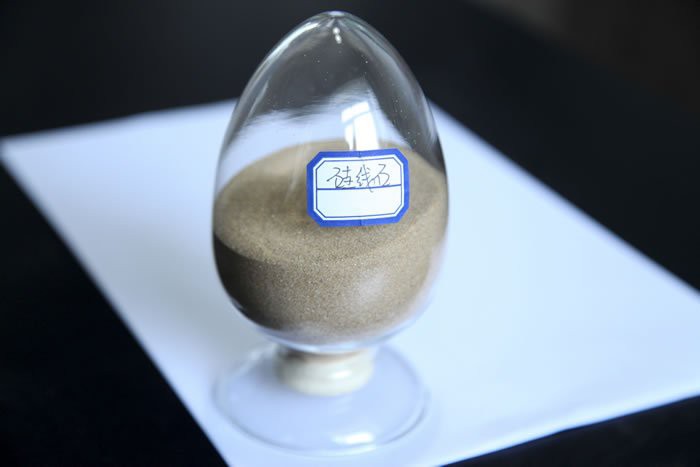
Sillimanite nepheline is characterized by stable chemical properties, good thermal shock resistance, high refractoriness, and good mechanical strength. It can be used as a raw material for ceramics, refractories, synthetic mullite, welding materials, and friction materials, and is widely used in metallurgy, the chemical industry, ceramics, and glass.
Sillimanite is also known as quartz or eclogite.It is a brown, light green, light blue, or white glassy Sillimanitete mineral. The crystals are columnar or needle-like, and when aggregated, they are often fibrous or radial, with a silky or glassy luster. Yuzenite can transform into mullite when heated. It is a typical high-temperature metamorphic mineral formed from aluminum-rich mudrock through advanced regional metamorphism, typically found in crystalline schist and gneiss, and also observed in aluminum-rich rocks and igneous contact zones. When heated to 1300 °C, eclogite converts into mullite, which can be used as a high-grade refractory material.
Physical And Chemical Specifications
| Detection Items | Detection Results |
| Al₂O₃(%) | 60.9 |
| SiO₂(%) | 37.05 |
| Product Specific Gravity | 3.24 |
| Refractoriness | 1850℃ |
| Service Temperature | <1700℃ |
| Mohs Hardness | 7.5 |
Process
Beneficiation and Purification:
After crushing and screening, the raw ore is purified by removing Fe₂O₃, TiO₂, and other impurities through magnetic separation and flotation. After purification, the Al₂O₃ content can reach 58% to 68%.
Calcination Treatment:
Raw Sillimanite: Used directly in unshaped refractories (e.g., castables and ramming materials), taking advantage of its expansion characteristics to compensate for shrinkage.
Calcined Sillimanite: Calcined at a high temperature of 1450–1600 °C to achieve complete phase transformation and volume stability. It is commonly used in the production of high-grade refractory bricks, prefabricated components, and ceramic-based composite materials.
Deep-Processing Technology:
Ultrafine crushing to the micron level, serving as a matrix to enhance material density.
Surface coating with Al₂O₃ or ZrO₂ to improve resistance to slag erosion.
Application
Regenerator Lattice Bricks:
In the regenerator chamber of glass kilns, where temperatures reach 1400–1600 °C, Sillimanite bricks exhibit strong resistance to erosion from glass liquid vapors. Their low thermal conductivity (1.2–1.8 W/m·K) helps reduce heat loss.
Spout and Flow Holes:
These areas are exposed to high-temperature erosion from alkaline glass liquids such as Na₂O and K₂O. Sillimanite bricks offer a service life that is 2–3 years longer than that of conventional high-alumina bricks.
Technical Advantage:
At high temperatures, a mullite network structure is formed, which inhibits the infiltration of glass liquid and prevents softening and spalling of the brick body.
Steel Industry: full-process applications from the blast furnace to the ladle
Ceramics and High-Temperature Kiln Furniture: "Structural Support" for Precision Temperature Control
Kiln Materials:
Sillimanite saggers and shed plates are used for the sintering of electronic ceramics (e.g., MLCC capacitors). With high refractoriness and a low coefficient of thermal expansion (4.5 × 10⁻⁶/°C), they help prevent deformation and cracking of ceramic products caused by the support components.
High-Temperature Furnace Lining:
In shuttle kilns and roller kilns, Sillimanite lightweight bricks with a density of 1.8–2.2 g/cm³ provide both thermal insulation and thermal shock resistance. They ensure furnace temperature fluctuations remain within ±5 °C.
Indefinite Refractory Materials: "On-Site Solution" for Flexible Construction
Low Cement Castables
Used as aggregate (30%–50%), Sillimanite's expansion characteristics compensate for the hardening shrinkage of castables, increasing flexural strength by 20%–30%.
Spray Patching Compound
Used for the rapid repair of cement kiln openings and steel furnace linings. Sillimanite nepheline fine powder (≤0.088 mm, ≥80%) bonds tightly with the substrate, achieving an adhesion strength of ≥5 MPa.
Cement Industry: "Pioneer of Corrosion Resistance" in Alkaline Environments
Rotary Kiln Transition Belt
Sillimanite-spinel composite bricks resist alkaline erosion caused by cement kiln dust (CaO content ≥40%). Their lifespan is 1.5 to 2 years, which is 50% longer than that of ordinary high-alumina bricks.
Decomposition Furnace Lining
Sillimanite-based castables resist alkali vapors (Na₂O, K₂O) and CO₂ atmospheres and exhibit strong resistance to spalling. They are suitable for fluctuating working conditions at temperatures from 1100 to 1450 °C.
7*24 hours online response
Provide professional after-sales protection
Our address
Qinghua Management Dist., Dashiqiao City, Yingkou City, Liaoning, China
Phone Number
+8613700131695
+8618540210631
info@zinfon-refractory.com

Hot Tags: sillimanite, China sillimanite manufacturers, suppliers, factory, sintered mullite, china aluminum, bauxite suppliers, bauxite and aluminum, bauxite raw material, aluminum material price