



Fused magnesia is a high-purity, high-melting-point, dense alkaline refractory material with a density greater than 3.40 g/cm³, a porosity of 0%–10%, a Mohs hardness of 5.5, and strong resistance to alkaline slag erosion. It is a crucial raw material for metallurgy, construction, light industry, furnace linings, and bulk materials, and is indispensable in steel, cement, glass, and non-ferrous metal smelting industries. It is widely used in metallurgy, glass, cement industries, household heaters, and high-temperature chemical industries. It is made by melting in an electric arc furnace, with characteristics of high purity, large crystal grains, dense structure, strong slag resistance, and good thermal shock stability, making it an excellent high-temperature electrical insulating material. The main raw materials for electric fused magnesia are selected high-grade natural periclase or high-purity light-burned magnesia, which are melted in an electric arc furnace and then cooled. Due to its excellent physical and chemical properties, it is considered an important raw material for producing high-grade magnesia bricks, magnesia-carbon bricks, and amorphous refractory materials.
Reburned magnesia is a chemical substance primarily composed of magnesium oxide, with very high refractoriness. It is produced by purifying natural high-grade dolomite ore through flotation, light burning, fine grinding, high-pressure briquetting, and ultra-high-temperature calcination in a vertical kiln. At 1800°C, the carbon dioxide in the dolomite ore is completely expelled, forming dense periclase blocks.
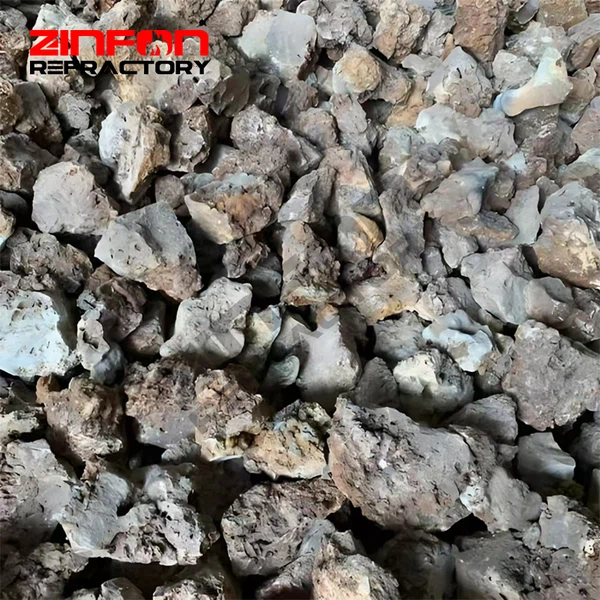

Medium-grade magnesia is a high-quality refractory material with a high magnesium oxide content, usually around 95%, and a bulk density generally above 3.17 g/cm³. The production process includes light burning in a rotary kiln, fine grinding, water mixing and briquetting, followed by mixing with solid fuel blocks and final calcination in a vertical kiln. The main crystal phase is periclase, with crystals mostly rounded and irregular. Its good sintering degree and dense crystallization make it widely used for producing medium-grade magnesia refractory products, such as magnesia bricks and ladle precast parts.
High-purity magnesia has a bulk density above 3.25 g/cm³, MgO content between 96.5% and 98.5%, excellent chemical stability, and mechanical strength. It is light yellow in color with a melting point above 2800°C and is an important raw material for producing high-grade magnesia bricks, magnesia-chrome bricks, and magnesia-alumina spinel bricks.
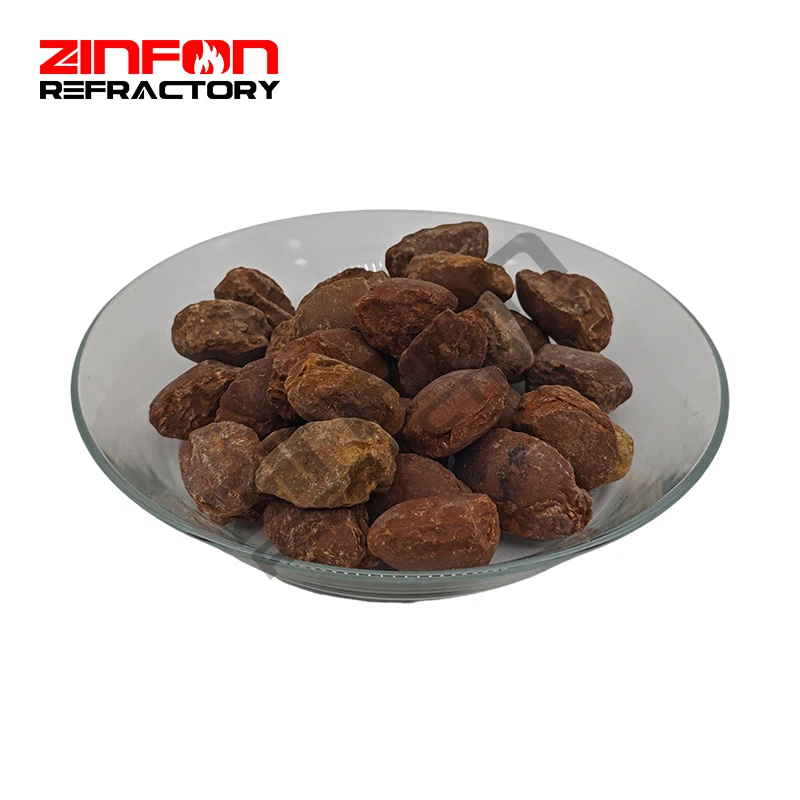

Fused magnesia-chrome sand is an important refractory material, characterized by high purity, high melting point, and dense structure. Also known as magnesia-chrome ore or magnesia-chrome spinel, it is a basic refractory raw material primarily composed of periclase and chromite spinel. It is produced by artificially synthesizing (through sintering or electric fusion) a mixture of magnesia-based raw materials (such as sintered magnesia, natural magnesite, or light-burned magnesia from seawater/brine-derived magnesium hydroxide) and chromite. Fused magnesia-chrome sand has a high melting point of up to 2800°C, with complete structure and dense texture.
This material is chemically stable, with high compressive strength, excellent insulation properties, and resistance to erosion and corrosion, making it a crucial raw material in metallurgy, construction materials, light industry, furnace linings, and bulk materials. Additionally, fused magnesia-chrome sand offers excellent resistance to chemical attack by alkaline slags and oxides. Due to its high purity and outstanding physical and chemical properties, it is an ideal material for producing semi-rebonded magnesia-chrome bricks, fused rebonded magnesia-chrome bricks, furnace linings, and various high-temperature tubes.
Hot Tags: magnesia sand, China magnesia sand manufacturers, suppliers, factory, Refractory admixture Silica Fume, refractory raw material for kiln, Alumina Silica, High purity Magnesia, Refractory admixture Aluminium Dihydrogen Phosphate, refractory raw material for glass furnace