



Introduction
Ceramic fiber cloth is a flexible high-temperature-resistant fabric made from ceramic fibers (such as alumina, silica, etc.) through spinning and weaving processes. It features lightweight, thermal insulation, thermal shock resistance, and strong corrosion resistance, making it suitable for high-temperature sealing, thermal protection, and other applications.
Fiber Diameter: 1.5–3 μm, formed into a warp-weft interwoven structure via knitting or weaving, with a density typically ranging from 200 to 1,000 g/m².
Surface Treatment: Can be coated with silicone, aluminum foil, graphite, or other materials to enhance corrosion resistance, conductivity, and other functionalities.
Specifications
1.5mm-6mm thickness, generally 1m width. Types include nickel-chromium alloy wire reinforced, stainless steel wire reinforced, glass fiber reinforced, ceramic fiber coated cloth, ceramic fiber slag-removal cloth, ceramic fiber sintered cloth, and ceramic fiber steaming cloth.
Advantage
(1)Continuous service temperature up to 1000°C; short-term service temperature up to 1260°C.
(2)Excellent resistance to acid-alkali corrosion and erosion from molten metals like aluminum and zinc.
(3)Good high-temperature strength and thermal insulation performance.
(4)Ceramic fiber cloth, tapes, packing, and other products using alkali-free glass fiber yarn as reinforcing material exhibit superior electrical insulation and high-temperature electrical insulation compared to pure glass fiber materials.
(5)Non-toxic, harmless, and odorless.
Zinfon Refractory Technology Co.,Ltd.
We provide one-stop services from technical consultation to design, production, and after-sales support.


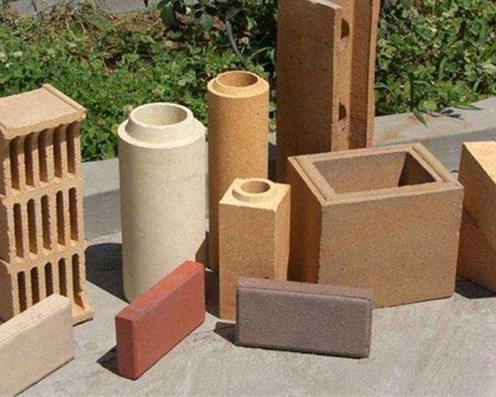
Raw Materials
Bauxite (Al₂O₃)
Role: Provides alumina (Al₂O₃), serving as the backbone component of ceramic fiber cloth, accounting for 40%–60%. Its purity directly affects refractoriness.
Types:
Ordinary type (Al₂O₃ 45%–55%): Suitable for scenarios below 1260°C, such as industrial furnace sealing.
High-alumina type (Al₂O₃ > 55%): Enhances high-temperature creep resistance, used in metallurgical equipment above 1400°C.
Silica (SiO₂)
Role: Provides silicon dioxide (SiO₂), accounting for 30%–50%. It forms an alumina-silica glass phase or mullite crystals with alumina, endowing the fabric with flexibility and chemical stability.
Requirements: Quartz sand with purity > 99%, impurity (Fe₂O₃, CaO) content < 0.5%, to avoid reducing refractoriness.
Zircon Sand (ZrO₂·SiO₂)
Function: Added at 10%–20% to high-end zirconium-containing fabrics to increase refractoriness to 1400–1600°C, while enhancing thermal shock resistance and slag erosion resistance.
Application: High-temperature scenarios such as glass kilns and aerospace thermal protection materials.
Physical and Chemical Specifications
|
Item/Grade |
Glass Fiber |
Stainless Steel |
|
Continuous Temperature Use Limit/℃ |
650 |
1000 |
|
Color |
White |
|
|
Bulk Density (kg/m³) |
500 |
|
|
Organic Content ≤/% |
15 |
|
Process
Fibrillation Preparation
Raw material melting (bauxite and other minerals → electric arc furnace at 1400–1600°C) → fiber formation via blowing/centrifugal spinning (diameter: 2–4 μm, length: 50–100 mm).
Textile Forming
Fiber carding → spinning (monofilament or multi-strand twisting) → weaving (plain, twill, or satin weave) → optional coating (silicone, ceramic sol, etc.).
Post-processing
High-temperature setting (300–500°C to remove organic impurities) → surface coating curing (to enhance tear resistance or sealing performance).


Application
Thermal insulation for kilns, high-temperature pipes, and containers.
Sealing materials for furnace doors, valves, and flanges; fireproof door and curtain materials.
Insulation for engines and instruments; fireproof cable wrapping; high-temperature fireproofing materials.
Fabrics for thermal insulation coverings, high-temperature expansion joint fillers, and flue linings.
High-temperature resistant protective gear, fireproof clothing, high-temperature filtration materials, and asbestos substitutes in adsorption applications.

Typical Application Scenarios and Cases

Industrial Sealing and Thermal Insulation
Applications: High-temperature pipe wrapping, kiln door curtain sealing, flange gaskets.
Case: A petrochemical plant's catalytic cracking unit uses zirconium-containing fiber cloth for sealing, withstanding 1200°C high temperatures and resisting oil-gas corrosion, reducing the leakage rate by 90%.
Fire and Safety Protection
Applications: Cable fireproof wrapping, welding curtains, liners for firefighters' high-temperature suits.
Features: Meets flame retardant grade UL94 V-0, blocking over 90% of thermal radiation.
Aerospace & Specialty Fields
Applications: Rocket engine insulation, spacecraft thermal protection blankets.
Advantages: Polycrystalline mullite fiber cloth maintains flexibility at 1600°C, with a density of only 0.8–1.2 g/cm³.
Selection and Usage Considerations
Temperature Matching
Long-term service temperature should be 100–150°C lower than the fiber type's maximum temperature resistance (e.g., zirconium-containing types ≤1300°C for prolonged use).
Environmental Adaptation
Avoid contact with molten metals, strong oxidizing agents (e.g., nitric acid), and high-concentration fluoride.
Select waterproof-coated types for humid environments and UV-resistant treatments for outdoor applications.
Installation Guidelines
Overlap seams by ≥50 mm and secure with high-temperature-resistant thread or specialized adhesives.
For dynamic sealing scenarios (e.g., rotating equipment), choose high-elasticity braided structures.
Hot Tags: ceramic fiber cloth, China ceramic fiber cloth manufacturers, suppliers, factory, high temperature ceramic blanket, Ceramic Fiber Blanket for Blast Furnace Lining, ceramic fiber insulation board, high temp ceramic tape, ceramic fireproof insulation, Ceramic Fiber Rope