




Introduction
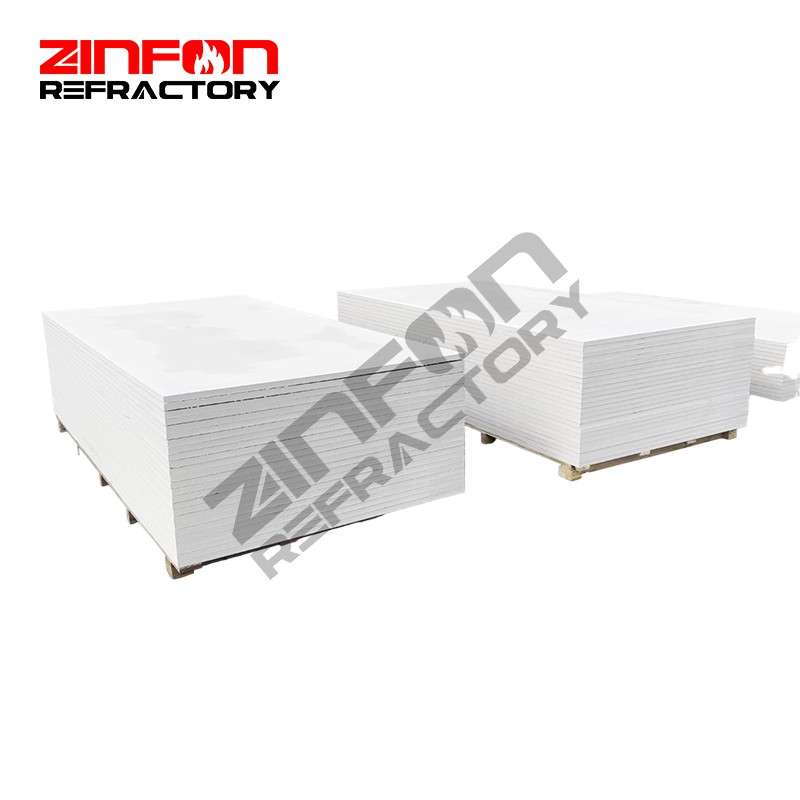
Calcium silicate board for thermal insulation, also known as microporous calcium silicate, is a new type of white, rigid insulation material. It is lightweight, high in strength, has low thermal conductivity, and is resistant to high temperatures and corrosion. Additionally, it offers good workability, as it can be cut and sawed. This material is widely used for thermal insulation of equipment, pipelines, walls, and roofs across industries such as electric power, metallurgy, petrochemical, construction, and shipping. The board typically has a thickness greater than 30 mm and a density ranging from 200 to 1,000 kg/m³.
Advantage
Fire Performance:
Classified as an A1 non-combustible material, it does not burn in a fire, emits no toxic smoke, and effectively prevents fire spread, protecting lives and property.
Thermal Insulation:
Features low thermal conductivity (≤0.35 W/(m·K) at room temperature), effectively reducing heat transfer, lowering building energy consumption, and providing excellent insulation.
Waterproof and Moisture-Proof:
Exhibits superior waterproofing to prevent moisture penetration, enabling long-term use in humid environments without deformation caused by moisture.
High Strength:
Durable with high flexural strength, resistant to breakage, and able to withstand external impact and pressure. As a protective layer for insulation, it safeguards the internal thermal core material.
Good Dimensional Stability:
Manufactured using advanced technology, it has low wet/dry shrinkage rates and stable dimensions, adapting to outdoor climates with seasonal temperature fluctuations without warping or deforming.
Acid-Alkali and Corrosion Resistance:
With stable performance, it resists acids, alkalis, and corrosion, is impervious to biological damage, ensures long service life, and requires low maintenance.
Environmental Protection:
An inorganic material free of formaldehyde and other harmful substances. The production process emits no pollutants and complies with green building standards.
Zinfon Refractory Technology Co.,Ltd.
We provide one-stop services from technical consultation to design, production, and after-sales support.


Raw Materials
Silica Material (50%–60%):
Provides silicon dioxide (SiO₂), which forms a high-temperature-resistant skeletal structure and enhances chemical stability.
Calcium Material (30%–40%):
Supplies calcium oxide (CaO), which reacts with silica to form hydrated calcium silicate (CaO·SiO₂·nH₂O) crystals that impart strength.
Fiber Reinforcements (5%–10%):
Includes asbestos fibers (now phased out), cellulose fibers, or mineral fibers to improve the sheet's flexural strength and toughness.
Additives (1%–5%):
Includes foaming agents (to create a porous structure and reduce thermal conductivity), waterproofing agents (to enhance moisture resistance), and others.
Physical and Chemical Specifications
|
Brand&Properties |
product |
|
|
Temperature |
1000℃ |
650℃ |
|
Bulk Density(kg/m³) |
230 |
230 |
|
Compressive Strength(MPa) |
0.52 |
0.6 |
|
Thermal Conductivity(w/m.k) |
0.05 |
0.062 |
|
Specification Tem.(℃) |
1050 |
650 |
|
Linear Shrinkage after Heating(%) |
1.5(1050℃,3hrs) |
1.5(650℃,3hrs) |
|
Bending Strength(MPa) |
0.45 |
0.3 |
Process
Raw Material Preparation:
Prepare diatomaceous earth, calcium carbide mud, cotton pulp composite fiber, and other raw materials. Specifically, the cotton pulp composite fiber is grafted with an epoxy silane coupling agent onto the surface of hollow mesoporous nanosilica, followed by a ring-opening reaction with hydroxyl groups on the cotton pulp fiber surface. The product is then obtained after heat treatment.
Mixing & Stirring:
Mix diatomaceous earth and calcium carbide mud, add water to form a slurry, then incorporate the cotton pulp composite fiber and blend thoroughly.
Forming & Molding:
Feed the mixed slurry into a board-making machine to form sheets, creating the green board.
Pre-Curing Treatment:
Place the green board into a mold and pre-cure it at 70–80°C for 8–20 hours.
Autoclave Curing:
After pre-curing, transfer the green board to an autoclave for steam curing at 160–170°C for 15–24 hours.
Drying:
Remove the autoclaved calcium silicate boards and dry them to reduce the moisture content to an appropriate level.
Sanding & Edging:
Sand and edge the dried boards to ensure a smooth surface and precise dimensions.
Quality Inspection:
Inspect the calcium silicate boards for appearance, dimensions, density, strength, thermal insulation performance, and other indicators to ensure compliance with quality standards.
Finished Product Storage:
Package and store the qualified thermal insulation calcium silicate boards for sale and use.


Application
Industrial Insulation Applications:
Boiler and pipe insulation, kiln linings, high-temperature equipment casings.
Advantages:
High-temperature resistance (up to 650°C), reduces heat loss, enhances equipment energy efficiency, and minimizes energy consumption.


Building Energy Saving Applications:
Wall insulation, roof insulation, fireproof isolation belts.
Advantages:
Excellent compatibility with cement mortar, allowing direct plastering or tiling, and combining thermal insulation with fireproofing functions.
Calcium Silicate Board for Kilns
The common sizes of kiln-grade calcium silicate boards may vary depending on specific application scenarios (e.g., kiln type, structural design) and industry standards. The following outlines typical specifications and parameter descriptions:
I. Common size ranges (typical values)
| Dimension | Common Specifications | Remarks |
| Thickness (mm) | 10, 15, 20, 25, 30, 40, 50 | For high-temperature zones (e.g., kiln linings), 20-50mm thickness is commonly selected to balance strength and thermal insulation; 10-20mm is suitable for low-temperature zones. |
| Length (mm) | 1200, 1800, 2400, 3000 | Standard board lengths are mostly 1200mm or 2400mm; lengths over 3000mm can be customized for large kilns. |
| Width (mm) | 600, 900, 1200 | The common width is 1200mm for easy construction and splicing; some manufacturers can provide non-standard widths such as 900mm. |
II. Special Specifications & Customization Requirements
Custom Shapes
Curved Plates: For circular kiln inner walls (e.g., rotary kilns), with radii customized to match kiln inner diameters (common curvature radii: 500–2000 mm).
Trapezoidal/Sectoral Plates: For kiln vaults or conical structures, angles machined according to design specifications (e.g., 60°, 90°).
Thickness Tolerance
Standard tolerance: ±0.5 mm (thickness ≤ 20 mm); ±1.0 mm (thickness > 20 mm). Tighter control is required for high-temperature applications to ensure joint sealing.
Edge Treatments
Straight, beveled, or tongue-and-groove edges: tongue-and-groove designs minimize heat loss through joints and are preferred for high-sealing applications (e.g., glass kilns, cement kiln firing zones).

III. Selection Recommendations
Thickness Selection by Temperature Zone
Below 600°C zones: 15–30 mm thick boards.
600–1000°C high-temperature zones: 30–50 mm thick boards or multi-layer composite structures (e.g., calcium silicate board plus ceramic fiber mat).
Thermal Expansion Consideration
Board dimensions should include expansion gaps (typically 2–3 mm per meter of length) to prevent deformation or cracking at high temperatures.
Customization Scenarios
Large industrial kilns (e.g., cement rotary kilns with diameters over 4 m) require customized large-format boards (e.g., 3000 mm × 1500 mm) to minimize joints.
Special kiln structures (e.g., horseshoe-flame glass kilns) require curved-shaped panels.
Hot Tags: calcium silicate board, China calcium silicate board manufacturers, suppliers, factory, ceramic fire wool, ceramic fiber for physical stability, Ceramic Fiber Blanket for Metallurgical, ceramic fiber blanket manufacturers, ceramic fiberboard for wood stove, ceramic fiber for fiber reinforced testing purposes materials