




Introduction
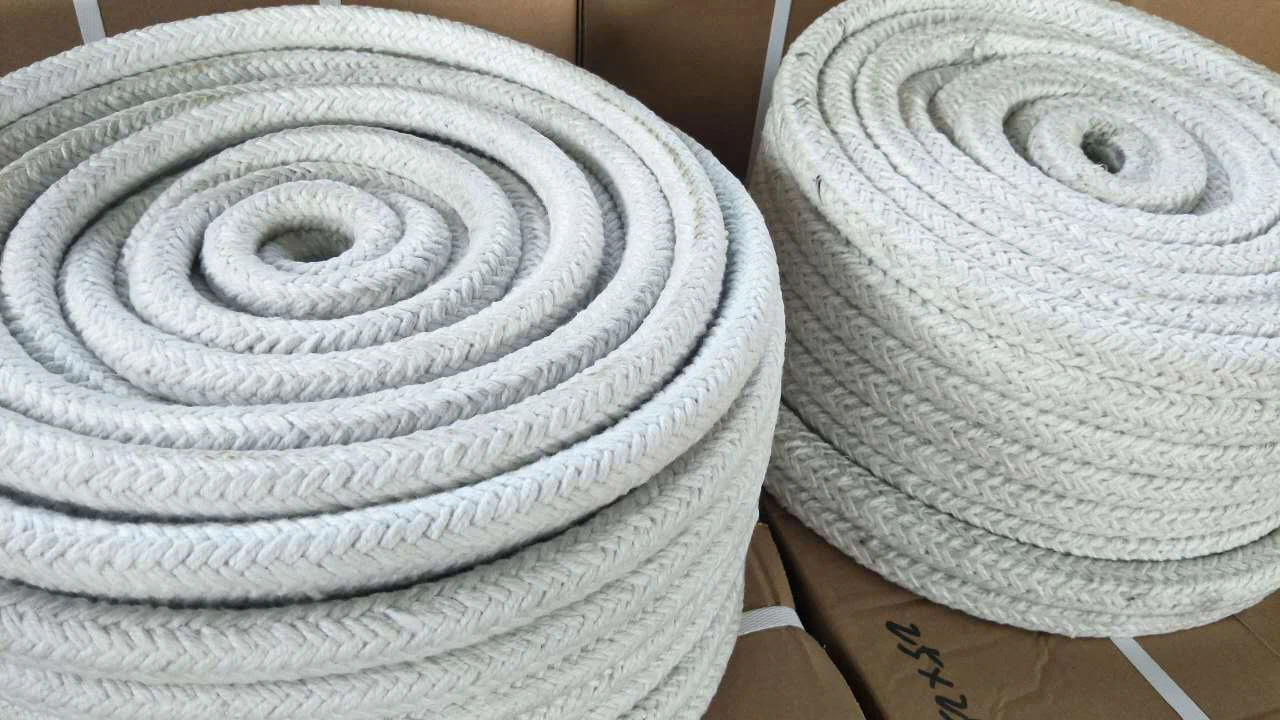
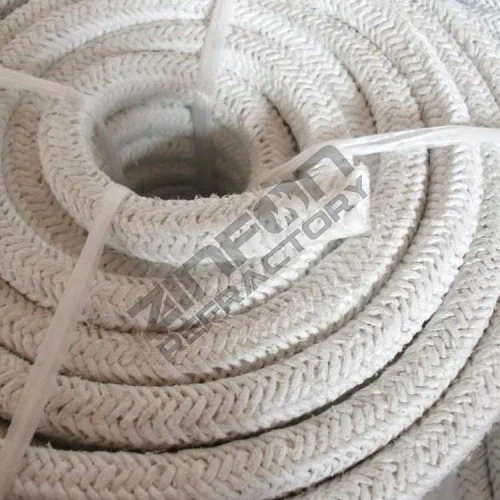
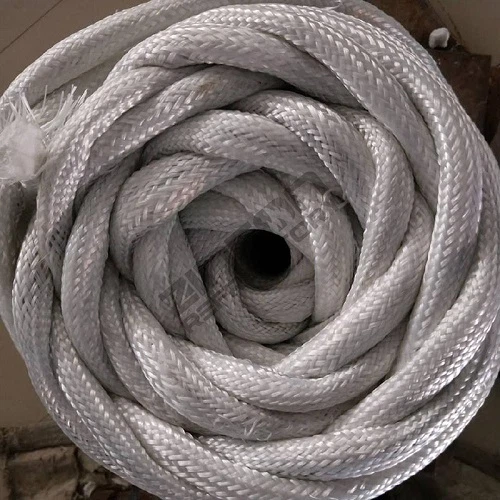
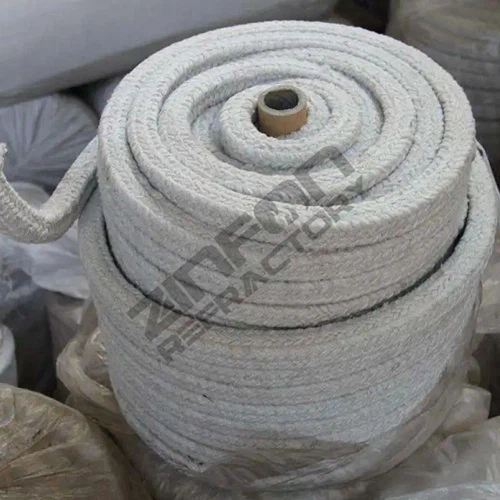
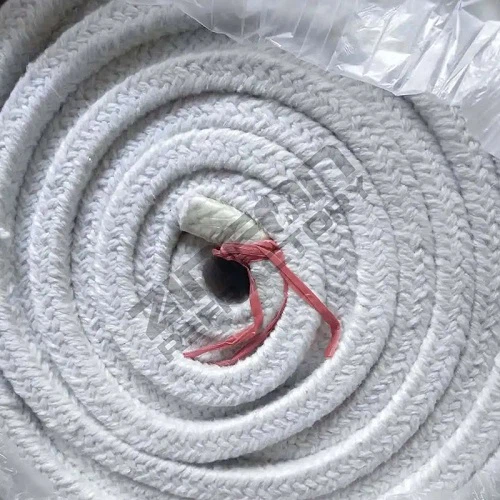
High-temperature sealing rope, also known as ceramic fiber rope, is braided from ceramic fiber cotton, non-alkali glass filaments, and high-temperature stainless steel alloy wires. Depending on the temperature rating and application environment, reinforcing materials such as glass fibers or heat-resistant alloy steel wires are added. It is primarily used for thermal insulation and sealing.
Advantage
High Temperature Resistance
Suitable for long-term use in environments of 800–1260°C, with short-term resistance up to 1400°C, making it ideal for high-temperature sealing applications.
Thermal Insulation
Low thermal conductivity (≤0.06 W/m·K at 250°C) effectively blocks heat transfer.
Chemical Stability
Resistant to acid and oil corrosion; however, avoid direct contact with strong alkalis (e.g., NaOH, KOH).
Flexibility & Sealing Performance
Conforms tightly to irregular gaps, adapting to displacement caused by equipment vibration or thermal expansion and contraction.
Lightweight & Environmentally Friendly
Density typically ranges from 110 to 180 kg/m³, asbestos-free, and compliant with modern industrial environmental standards.
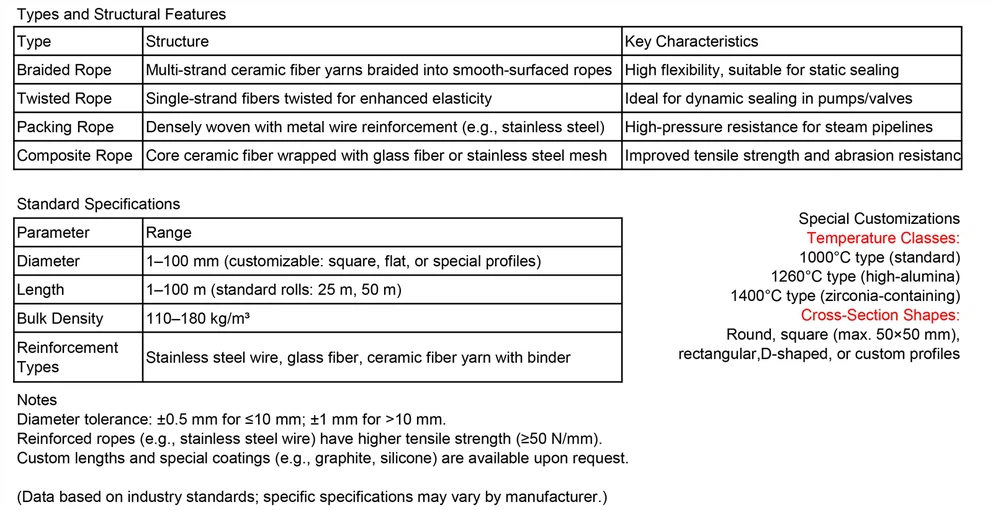
Common Types and Specifications
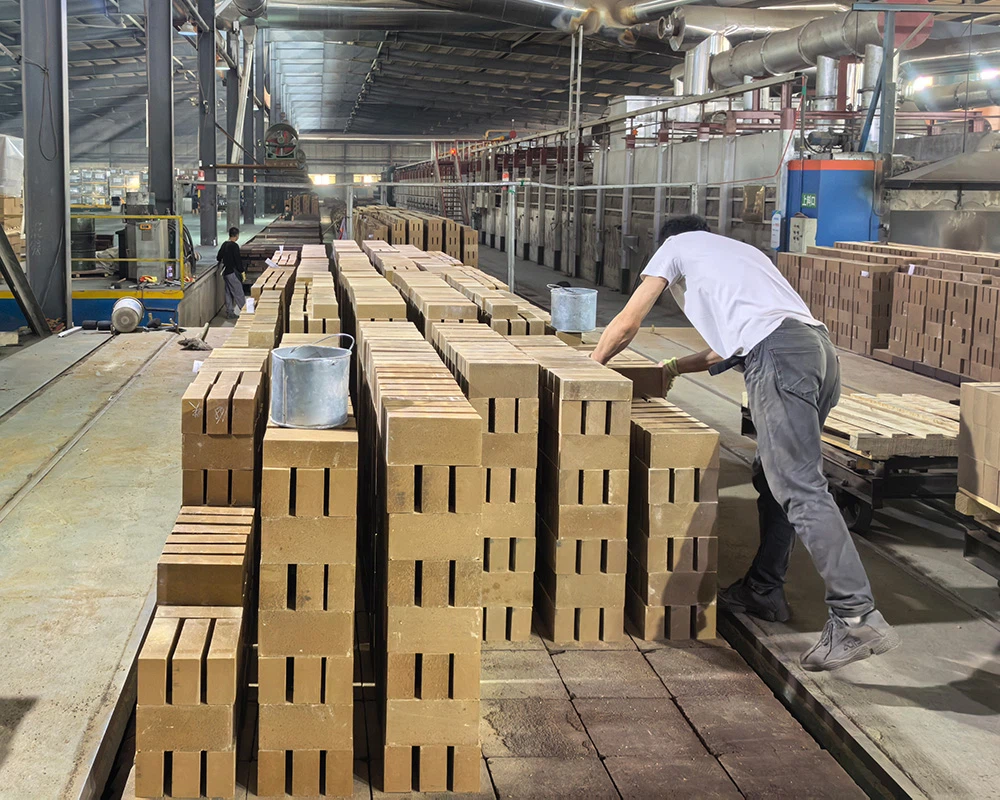
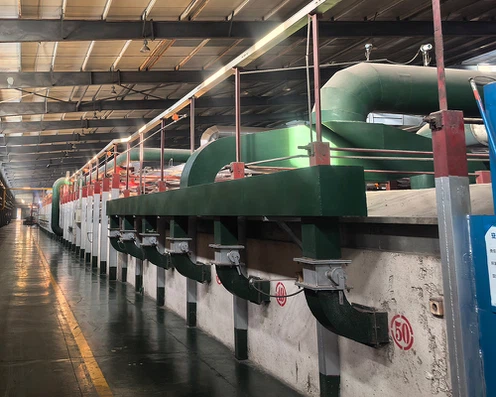
Zinfon Refractory Technology Co.,Ltd.
We provide one-stop services from technical consultation to design, production, and after-sales support.

Raw Materials
Ceramic Fiber (Main Raw Material)
Chemical Composition
Standard Type: Al₂O₃ 45%–55%, SiO₂ 40%–45%, temperature resistance 1000–1260°C.
High-Alumina Type: Al₂O₃ 51%–55%, SiO₂ 40%–44%, temperature resistance 1300–1400°C.
Zirconia-Containing Type: Al₂O₃ 38%, SiO₂ 44%, ZrO₂ 15%–17%, temperature resistance 1400–1600°C.
Morphology
Short fibers with a diameter of 2–4 μm and length of 50–200 mm, processed into a fluffy cotton-like material for easy yarn weaving.
Reinforcing Fibers (Optional Additives)
Stainless Steel Wire: 0.1–0.5 mm diameter, enhances rope tensile strength (e.g., for high-pressure packing ropes).
Glass Fiber: Temperature resistance ≤600°C; often used as an outer covering to improve abrasion resistance.
Basalt Fiber: Temperature resistance 1000–1200°C; blended with ceramic fiber to enhance flexibility.
Physical and Chemical Specifications
|
Brand Properties |
Bio-Soluble fiber Rope |
Ceramic fiber Rope |
|||
|
GF-Rope |
SS-Rope |
GF-Rope |
SS-Rope |
||
|
Specification Temp. (℃) |
1260 |
||||
|
Working Temp. (℃) |
500-600 |
1100 |
500-600 |
1100 |
|
|
Bulk Density (kg/m3) |
500 |
||||
|
Organic matter (%) |
15 |
||||
|
Moisture Content(%) |
1 |
||||
|
Chemical Composition(%) |
SiO₂ |
55-65 |
51 |
||
|
CaO |
23-35 |
- |
|||
|
MgO |
5-10 |
- |
|||
|
Al₂O₃ |
- |
45 |
|||
|
Fe₂O₃ |
- |
0.8 |
|||
Process
- Raw Material Deslagging & Opening → Carding & Sliver Making → Drawing & Roving → Yarn Twisting → Braiding → Impregnation & Curing → Graphite Treatment → Cutting & Packaging
Spinning Process
Sliver Making
The opened ceramic fiber is fed into a carding machine to produce uniform slivers (weight deviation ≤±3%).
If reinforcing fibers are required, they are fed synchronously at a specified ratio (e.g., ceramic fiber: stainless steel wire = 90:10).
Drawing & Roving
6–8 slivers are merged and drawn into finer slivers (≈10mm diameter) by a drawing frame.
A roving frame twists the slivers into roving (5–10 twists/10cm), which is wound onto bobbins.
Yarn Twisting
A ring spinning machine further draws and twists the roving into 0.5–2mm single-strand yarns.
Twist levels are adjusted by application: 20–30 twists/10cm for static sealing ropes, 30–50 twists/10cm for dynamic sealing ropes.
Braiding & Molding
Braiding Equipment
Circular Looms: Produce round ropes with 6–24 spindles, weaving at 10–30 m/min.
Flat Looms: Manufacture flat or square ropes up to 200mm width.
Braiding Structures
Three-Strand Twisted Ropes: Single yarns twisted three times in reverse, diameter 3–10mm.
Multi-Strand Braids: 6, 8, or 12 strands cross-braided for dense structures (e.g., packing ropes).
Composite Braids: Inner ceramic fiber core with outer glass fiber cloth or stainless steel mesh.
Post-Treatment Process
Impregnation & Curing
Impregnate with silica sol (8%–12% concentration) to enhance fiber bonding.
Cure at 180–220°C for 2–4 hours (residual volatiles ≤3%).
Graphite/Lubricant Treatment
Dynamic sealing ropes are immersed in graphite emulsion (20%–30% solids) for self-lubrication.
Excess emulsion is centrifuged off, followed by low-temperature drying at 80–120°C.
Cutting & Winding
An automatic cutting machine trims ropes to specified lengths (tolerance ≤±5mm).
Finished products are wound on paper/plastic cores and packed in moisture-proof bags.
Main Equipment List
Opening Equipment: Three-roller opener, vibrating screen.
Spinning Equipment: Carding machine, drawing frame, ring spinning frame.
Braiding Equipment: High-speed circular loom, flat loom.
Post-Treatment Equipment: Impregnation tank, drying oven, automatic rope cutting machine.


Application
Industrial Applications
High-Temperature Equipment Sealing: Insulation sealing for kiln doors, heating furnace interfaces, and boiler flanges.
Pipeline Insulation: Flexible wrapping and sealing for steam pipes and high-temperature flues.
Equipment Packing: Dynamic sealing for pumps, valves, and fan shafts (e.g., in high-temperature, high-pressure conditions).
Construction Applications
Fireproof Partitioning: Fire sealing for building gaps and fire door seals.
Thermal Insulation Layers: Insulation filling for high-temperature zones in curtain walls and roofs.
Specialized Fields
Aerospace: Thermal insulation sealing for engine compartments.
Metallurgical Casting: Gap filling for molten metal equipment (e.g., sealing of casting ports).
Storage Requirements
Store in a dry, ventilated area away from water and strong alkalis. Avoid outdoor stacking, as it can cause fiber moisture damage.
Hot Tags: ceramic fiber rope, China ceramic fiber rope manufacturers, suppliers, factory, ceramic fiber for color options, ceramic fiber products, ceramic fire insulation, ceramic blanket for wood stove, Continuous Casting Refractory, ceramic fiber wool