




Introduction
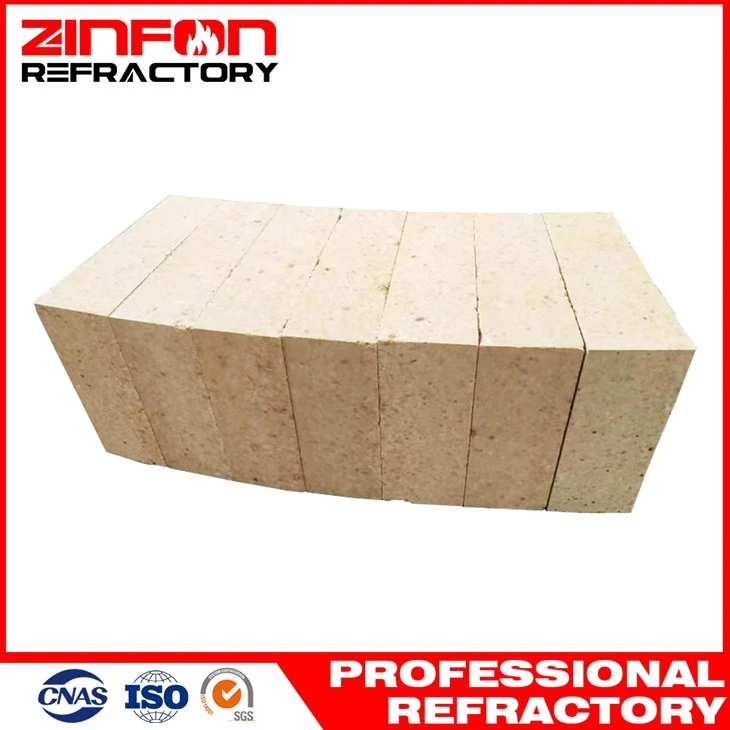
Anti-stripping high alumina bricks are manufactured from premium-grade high alumina bauxite clinker and ZrO₂-containing materials, mixed in precise proportions, formed under high pressure, and fired at high temperatures. These bricks are characterized by strong spalling resistance, high refractoriness, excellent crack resistance, and robust corrosion resistance. They withstand corrosion from potassium, sodium, sulfur, chlorine, and alkaline salts, and exhibit low thermal conductivity.
Primarily composed of calcined high-alumina bauxite, these bricks are blended with zircon sand or andalusite-mullite in specific ratios, then formed by high-pressure molding and high-temperature sintering. This process enhances their thermal shock resistance, load softening temperature, and high-temperature strength compared to standard high alumina bricks.
Advantage
1. Exceptional Thermal Shock Resistance
Mitigates cracking and spalling caused by rapid temperature fluctuations (e.g., 800°C to 1200°C shifts in industrial kilns), outperforming standard high alumina bricks by three times in thermal shock stability.
2. Superior Refractoriness and High-Temperature Strength
Refractoriness: Withstands temperatures up to 1790°C, ensuring stability in extreme heat zones such as blast furnace boshes or EAF arcs.
Load Softening Temperature: Maintains structural integrity under heavy mechanical loads at high temperatures, reducing deformation risks in load-bearing linings.
3. Enhanced Corrosion Resistance
Resists attack from aggressive chemicals, including:
Alkali metals (K⁺, Na⁺) and alkaline salts (e.g., Na₂CO₃, K₂SO₄) in cement kilns.
Sulfur (SO₂, SO₃) and chlorine (HCl) compounds in waste incinerators or coal-fired boilers.
Molten metals and slags in non-ferrous smelting (e.g., Al, Cu melts).
Corrosion rate is 50–70% lower than that of ordinary high alumina bricks in acidic or alkaline environments.
4. Improved Abrasion and Erosion Resistance
Dense microstructure (achieved via high-pressure molding and sintering above 1600°C) resists scouring from high-velocity flue gases, fly ash, and granular materials (e.g., in blast furnace charge descent or cement kiln raw meal). Surface wear rate is reduced by approximately 40% compared to conventional refractories in abrasive environments.
Zinfon Refractory Technology Co.,Ltd.
We provide one-stop services from technical consultation to design, production, and after-sales support.


Raw Materials
High-alumina bauxite clinker and ZrO₂-containing synthetic materials serve as the main raw materials, along with a certain amount of composite binder and additives.
Physical and Chemical Specifications
|
Item |
Specification |
|
|
KBL-70 |
KBL-75 |
|
|
Al2O3 % |
≥70 |
≥75 |
|
ZrO2 % |
≥6.0 |
/ |
|
Fe2O3 % |
≤1.5 |
≤1.5 |
|
Bulk Density, g/cm3 |
≥2.55 |
≥2.6 |
|
Apparent Porosity, % |
≤22 |
≤20 |
|
CCS, MPa |
≥60 |
≥70 |
|
0.2MPa RUL℃ |
≥1470 |
≥1520 |
|
TSR, Cycle 1100℃ Water |
≥25 |
≥20 |
process
Raw material preparation, batching, mixing, molding, drying, firing, inspection, and packaging.


These bricks can be divided into two categories based on chemical composition:
ZrO₂-containing anti-spalling high alumina bricks, designated GKBL-70 in the new national standard;
ZrO₂-free anti-spalling high alumina bricks, designated KBL-70.
ZrO₂-containing bricks exhibit superior resistance to penetration and erosion by sulfur, chlorine, and alkali components, as well as enhanced spalling resistance.
application
Anti-spalling high alumina bricks offer excellent spalling resistance, thermal shock stability, and chemical erosion resistance. They find wide applications in various high-temperature industrial sectors, including:
Cement Industry:
In new dry-process cement kilns, these bricks are commonly used in kiln hoods, riser ducts, cooling zones, decomposition zones, safety zones, transition zones, and other critical components. These areas endure complex stresses during cement production, including high temperatures, mechanical impact, chemical erosion, and thermal shock. Anti-spalling high alumina bricks excel under these conditions, extending kiln lining service life, reducing repair frequency and downtime, and enhancing cement production efficiency and economic viability. They are also used similarly in Lepol kilns and wet-process kilns.

Lime Industry:
In rotary kilns for calcining quicklime, the transition zone experiences severe temperature fluctuations and intense material erosion. Anti-spalling high alumina bricks, with their exceptional thermal shock and erosion resistance, operate stably in this region, effectively resisting scouring by high-temperature lime materials and chemical attack, thus extending the rotary kiln lining's service life and ensuring stable lime production.
Non-Ferrous Metal Smelting:
In small rotary kilns for refining non-ferrous metals such as copper and zinc, the production process involves high temperatures, complex atmospheres, and slag erosion. Anti-spalling high alumina bricks serve as lining materials to withstand these conditions, resisting thermal and chemical attack, protecting the kiln structure, extending service life, and reducing production costs.
Industrial Furnaces and Kilns:
In glass kiln regenerators, ceramic kiln combustion chambers, and other systems requiring resistance to high temperatures, thermal shock, and chemical erosion, anti-spalling high alumina bricks are used to line critical components, enhancing overall performance and service life.
Advantages Over Other Refractory Bricks
Excellent Thermal Shock Resistance
Conventional refractory bricks often suffer spalling and cracking due to internal stress during rapid temperature fluctuations. Anti-spalling bricks maintain stability through specialized raw material formulations and production techniques.
Superior High-Temperature Mechanical Properties
They exhibit high compressive strength at room and elevated temperatures, withstanding substantial mechanical loads without significant deformation or failure.
Exceptional Erosion Resistance
High alumina content ensures robust chemical stability, resisting a wide range of corrosive substances:
In cement kilns, they resist attack from alkaline compounds and sulfides.
In glass kilns, they resist erosion by oxides in molten glass.
Their dense microstructure minimizes penetrative erosion, extending refractory lifespan and reducing kiln maintenance costs and downtime.
High Abrasion Resistance
With a hard texture and excellent abrasion resistance, these bricks withstand constant material scouring and friction, retaining integrity and shape, minimizing wear-related replacements, and enhancing kiln operational efficiency.
Importance of Slow Temperature Increase During Kiln Baking
Moisture Evaporation
Anti-spalling bricks absorb moisture during production and installation, including physically adsorbed and chemically bound water. Rapid heating causes abrupt vaporization, generating high internal vapor pressures that can cause cracking, spalling, or delamination. Slow heating allows gradual moisture escape, preventing damage.
Thermal Stress Mitigation
Composed of multiple mineral phases (corundum, mullite, zirconia), the bricks exhibit varying thermal expansion coefficients. Rapid heating causes uneven expansion and thermal stress, risking cracking. Gradual heating promotes uniform temperature distribution and stress dissipation.
Crystalline Structure Stabilization
Mineral phases undergo critical transformations during heating (e.g., mullite formation, corundum refinement). Slow heating facilitates complete and uniform phase transitions, creating a dense, homogeneous microstructure. Rapid heating can cause incomplete transformations, compromising thermal shock resistance, strength, and durability, reducing service life.
why choose us?
01/Custom sizes and shapes
02/Fast lead times and logistics
03/Customized packaging
04/Reasonable Prices
It is worth noting that while price is an important factor, it should not be the sole determinant of your purchasing decision. When buying refractory bricks from ZINFON, quality, reliability, and technical support are equally important considerations.
By choosing ZINFON as your supplier, you can access high-quality refractory bricks, a wide range of other refractory materials, and comprehensive support. Contact ZINFON Refractories immediately to discuss your specific requirements and obtain customized solutions!
7*24 hours online response
Provide professional after-sales protection
Our address
Qinghua Management Dist., Dashiqiao City, Yingkou City, Liaoning, China
Phone Number
+8613700131695
+8618540210631
info@zinfon-refractory.com

Hot Tags: anti-stripping high alumina brick, China anti-stripping high alumina brick manufacturers, suppliers, factory, High Alumina Brick for Electric Arc Furnace, High alumina brick for calcining furnace, mullite refractory brick, high alumina, alumina refractory brick vendor, alumina refractory brick used in